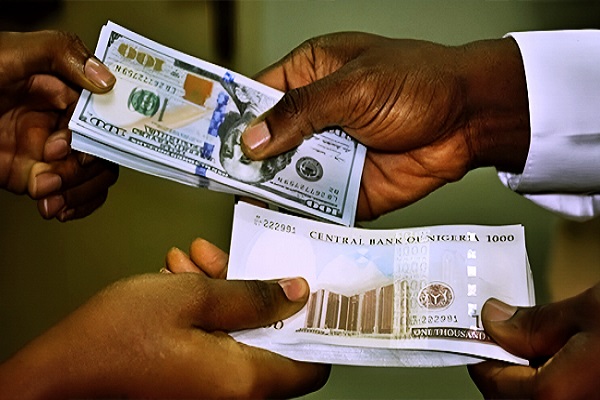
Nigeria’s trade relationship with the United States took a sharp turn in the first nine months of 2025, as exports to the American market dropped significantly while imports more than doubled, swinging the balance strongly in Washington’s favour.
Data from the National Bureau of Statistics show that Nigeria exported goods worth N3.65 trillion to the US between January and September 2025, down from N4.59 trillion recorded during the same period in 2024. This represents a decline of about N940.98 billion, or 20.5 per cent.
In contrast, imports from the United States surged to N6.80 trillion within the same nine-month period, up from N3.01 trillion a year earlier. The sharp rise of N3.78 trillion, or 125.5 per cent, means Nigeria bought far more from the US than it sold in 2025.
As a result, Nigeria recorded a trade deficit of about N3.15 trillion with the United States in the first three quarters of 2025. This is a major reversal from the N1.57 trillion trade surplus Nigeria enjoyed over the same period in 2024.
The worsening trade position coincided with the introduction of a new “reciprocal” tariff regime by the US government. Under the policy, Nigeria’s tariff rate was increased from 14 per cent to 15 per cent, effective August 7, 2025. While crude oil exports were largely exempted, the higher tariffs applied to many non-oil Nigerian products, creating uncertainty for US buyers and weakening demand.
Non-oil exports appear to have been hit hardest. In 2024, Nigeria’s exports to the US grew steadily across all three quarters, while imports remained relatively stable, producing consistent trade surpluses. That pattern changed dramatically in 2025. Although exports started strong at N1.54 trillion in the first quarter, they declined in the second quarter and collapsed in the third. Imports moved in the opposite direction, rising sharply each quarter and widening the trade gap.
On a year-on-year basis, exports grew in the first quarter of 2025 but fell sharply in the second and third quarters. Imports, however, rose across all quarters, with especially steep increases in the latter half of the year. By mid-2025, the United States had dropped out of Nigeria’s top five export destinations, even though it remained one of the country’s largest sources of imports.
Product-level data further highlights the imbalance. Early in 2025, Nigeria’s exports to the US were dominated by crude oil, fertiliser, jet fuel and gas. By the second and third quarters, the export basket narrowed significantly to items such as cocoa products, rubber and soya derivatives. Meanwhile, imports from the US expanded rapidly, driven mainly by crude petroleum oils, used vehicles, wheat, motor spirit and industrial materials.
Despite the shift, the Federal Government has played down fears over the situation. President Bola Tinubu has said Nigeria is resilient and not overly exposed to US trade policies, stressing that growing non-oil revenue provides a buffer against external shocks. He noted that if non-oil revenue continues to rise, Nigeria has little reason to fear foreign tariff actions.
Read Also;
Nicki Minaj Explains Why She Spoke Out on Alleged Persecution of Christians in Nigeria
The Minister of Industry, Trade and Investment, Jumoke Oduwole, also said Nigeria would not rush into retaliation but would remain focused on reforms, diversification and expanding access to new markets. She highlighted Nigeria’s growing trade within Africa and strengthening partnerships with countries such as Brazil, China, Japan and the UAE.
Trade experts and economists have echoed similar views, describing the US tariffs as both a challenge and an opportunity. They argue that Nigeria can use the situation to diversify exports, deepen South–South cooperation, and reduce reliance on a narrow set of commodities and markets.
While tariffs pose challenges, some analysts believe other issues—such as US visa restrictions affecting business travel, students and exchange visitors—could have a more lasting impact on trade and investment ties if not addressed.