No fewer than 10 states across Nigeria are planning to raise about ₦4.287 trillion from loans, bonds, grants, capital receipts and public-private partnerships to fund capital projects in their 2026 budgets.
The states—Lagos, Abia, Ogun, Enugu, Osun, Delta, Sokoto, Edo, Bayelsa and Gombe—have collectively presented budgets totalling ₦14.174 trillion to their respective state assemblies.
A review of the budget proposals shows that many states are increasingly relying on non-recurring sources of funding beyond statutory federal allocations, value-added tax receipts and internally generated revenue (IGR) to finance large-scale infrastructure and development programmes.
Experts say this growing dependence on borrowing reflects weak fiscal discipline and poor management of public funds, rather than a lack of revenue. They warn that while borrowing can support development if properly managed, excessive and unchecked debt could place a heavy burden on future generations.
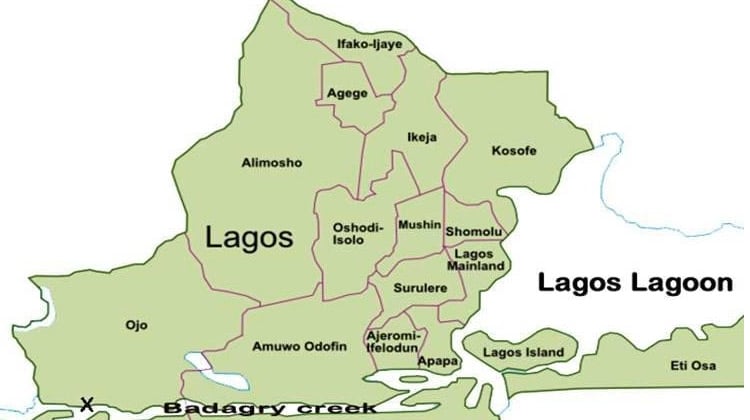
Lagos State, which has the largest subnational budget in the country, proposed a ₦4.237 trillion budget for 2026. Of this amount, ₦3.12 trillion is expected from IGR and federal transfers, leaving a gap of ₦1.117 trillion—about 26.4 per cent—to be financed through loans and bonds. Despite having one of the strongest revenue bases among Nigerian states, borrowing remains a major tool for funding its infrastructure plans.
Former Vice-Chancellor of Crescent University, Prof. Sheriffdeen Tella, said states should prioritise living within their means and strengthening internal revenue generation.
“States were not originally meant to borrow heavily because they depend largely on federal allocations,” he said, adding that weak fiscal discipline at the federal level has filtered down to the states, encouraging widespread debt accumulation.
Abia State’s proposed ₦1.016 trillion budget highlights the challenges faced by smaller states. The government expects ₦607.2 billion from federal allocations, VAT, grants and other revenues, leaving a funding gap of ₦409 billion, or about 40.3 per cent, to be covered through borrowing and other non-recurring sources.
Although Abia made notable progress in reducing its domestic debt in 2025, the scale of its planned capital spending means borrowing will still play a major role in 2026.
Ogun State’s ₦1.669 trillion “Budget of Sustainable Legacy” projects ₦509.88 billion from IGR and ₦554.81 billion from federal transfers, while ₦518.9 billion—about 31.1 per cent—will come from loans and grants.
Enugu State is proposing a ₦1.62 trillion budget, representing a 66.5 per cent increase over the previous year. While revenue from IGR and federal allocations will cover a significant portion, ₦329 billion, or 20.3 per cent, is expected from loans and capital receipts.
Labour leaders have criticised the budgeting culture in Nigeria, arguing that poor implementation and weak enforcement make budgets ineffective. Assistant General Secretary of the Nigeria Labour Congress, Chris Onyeka, said budgets often lose their value when performance levels remain low and violations go unpunished.
“A budget is a law once it is passed. If it is ignored or violated, there should be consequences,” he said, noting that extra-budgetary spending has become common practice.
Osun State’s ₦723.45 billion budget relies on ₦286.01 billion—about 39.5 per cent—from capital receipts, even as the state has made progress in reducing both its external and domestic debts in recent years.
Delta State’s ₦1.664 trillion budget will require ₦694 billion, or 41.7 per cent, from loans and grants despite projected improvements in IGR and federal allocations. Sokoto State plans to source ₦233.8 billion, representing 30.8 per cent of its ₦758.7 billion budget, from grants and capital development funds.
Edo State will finance ₦299 billion, or 31.8 per cent of its ₦939.85 billion budget, through loans, grants and public-private partnerships. Bayelsa State plans to fund ₦74.9 billion—7.4 per cent of its ₦1.01 trillion budget—from loans and grants, while Gombe State is the most dependent, with ₦325.5 billion, or 60.8 per cent of its ₦535.7 billion budget, expected from loans and capital receipts.
Read Also;
IBEDC Warns Customers Against Fake SMS Promising Electricity Bill Refunds
Fiscal analysts warn that states with weak IGR are especially vulnerable, as delays in accessing loans or grants could disrupt budget implementation and worsen debt servicing pressures.
Managing Director of Optimus by Afrinvest, Dr Ayodeji Ebo, said heavy reliance on borrowing exposes states to funding risks.
“For long-term sustainability, states must focus on building strong local revenue bases rather than depending excessively on loans and grants,” he said.
As states push ambitious spending plans for 2026, experts insist that transparency, accountability and prudent use of borrowed funds will be critical to avoiding deeper fiscal trouble in the years ahead.