
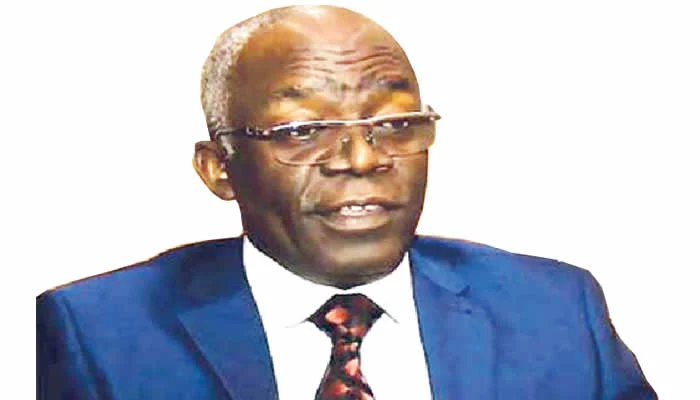
Human rights lawyer and Senior Advocate of Nigeria, Femi Falana, has warned that the newly signed tax laws cannot legally take effect until lingering controversies over their authenticity are resolved.
Speaking with journalists on Wednesday in his hometown of Ilawe-Ekiti, Ekiti State, Falana said the Federal Government should have used the closing days of 2025 to clear all doubts surrounding the laws and make verified, “clean” copies publicly available ahead of their planned commencement on January 1, 2026.
According to him, going ahead with implementation without resolving these issues could land the government in serious legal trouble.
“If that was not done, the government will be putting itself in danger by trying to implement the laws. There are interest groups already prepared to challenge their legitimacy,” he said.
Falana’s comments follow allegations that some provisions were secretly inserted into the tax bills passed by the National Assembly, making the versions signed into law by President Bola Tinubu on June 26, 2025, different from what lawmakers approved.
Despite the controversy, President Tinubu had, in a statement on Tuesday, insisted that the new tax laws would take effect as scheduled from January 1, 2026. He described the reforms as a “once-in-a-generation opportunity” to build a stronger and fairer fiscal system, stressing that the laws were not designed to raise taxes but to streamline the tax structure, protect citizens’ dignity and strengthen the social contract.
However, Falana disagreed, arguing that unresolved questions about the authenticity of the laws make any commencement date premature.
“There are serious questions about which tax laws we are even talking about. Until we have clean and authentic copies, you cannot talk about implementation,” he said.
He criticised the National Assembly for failing to make the final versions of the laws easily accessible, describing the situation as unacceptable in a modern democracy.
“If you want to run a transparent government, laws passed by the legislature and signed by the President should be available to everyone. Why are these laws not on the National Assembly’s website?” he asked.
Falana also urged Nigerians to study the tax laws closely, noting that the government considers them a key part of its economic reform agenda. He stressed that authorities must be ready to justify any new tax burden placed on citizens.
“The government cannot expect Nigerians to pay more taxes when many cannot afford school fees, medical bills or even basic food. Taxes must be used to fight poverty, unemployment, insecurity and infrastructural decay,” he said.
Read Also;
Dollar to Naira exchange rate today, December 31, 2025
The senior lawyer further warned of possible legal action over what he described as discriminatory provisions in the new tax regime, particularly exemptions granted to some companies operating in free trade zones.
He argued that excluding highly profitable companies from paying taxes while ordinary citizens bear the burden is unjust and unconstitutional.
“In a progressive tax system, the rich should pay more than the poor. What we have now is the reverse. It is discriminatory, illegal and unacceptable,” Falana said, adding that such laws, many of which date back to military rule, would not stand constitutional scrutiny.
He concluded that once the laws are properly passed and clarified, the Federal Government should be prepared for court challenges aimed at correcting what he called an unfair tax system.