
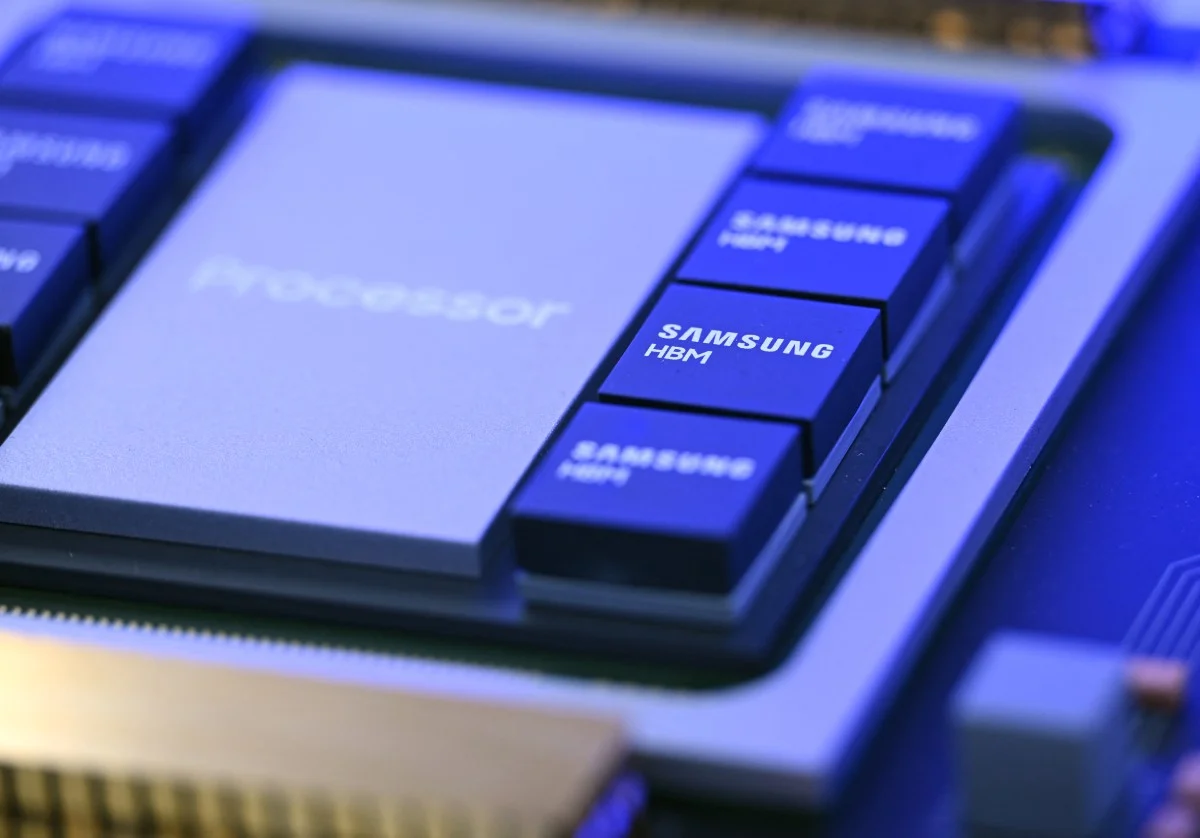
Samsung Electronics has announced that it has started mass production of its next-generation high-bandwidth memory chip, HBM4, a major component expected to drive the rapid expansion of artificial intelligence technology worldwide.
The South Korean tech giant made the announcement on Thursday, describing the development as an “industry-leading” breakthrough and confirming that commercial products have already been shipped to customers.
Samsung said the achievement gives the company an early advantage in the highly competitive HBM4 market, as global demand for advanced memory chips continues to surge due to the rising need for large AI-powered data centres.
High-bandwidth memory chips such as HBM4 are crucial for AI computing because they allow faster data processing and support the heavy workloads required by modern AI systems.
Samsung revealed that its HBM4 chip offers a significant improvement over older models, exceeding industry standards for processing speed by more than 40 per cent. The company said the advancement is aimed at meeting increasing demand for higher performance in AI infrastructure.
US chip giant Nvidia, currently the world’s most valuable company, is widely expected to be one of Samsung’s biggest customers, as Nvidia continues to dominate the global AI hardware market.
Following the announcement, Samsung Electronics shares rose by more than six per cent in afternoon trading on South Korea’s stock exchange.
Samsung and its rival SK hynix are already leading producers of advanced memory chips and have been racing to secure dominance in the fast-growing AI chip market.
Read Also;
Naira down to N1,455/$ in parallel market
Meanwhile, TrendForce, a Taipei-based research firm, predicts that global memory chip industry revenue could climb to a record peak of over $840 billion by 2027.
Samsung has also committed billions of dollars to expanding its chip production facilities and upgrading manufacturing processes to meet rising demand.
Industry experts, however, warn that the heavy focus on AI chip production could push up the prices of consumer electronics, as manufacturers prioritise supply for AI-related products.