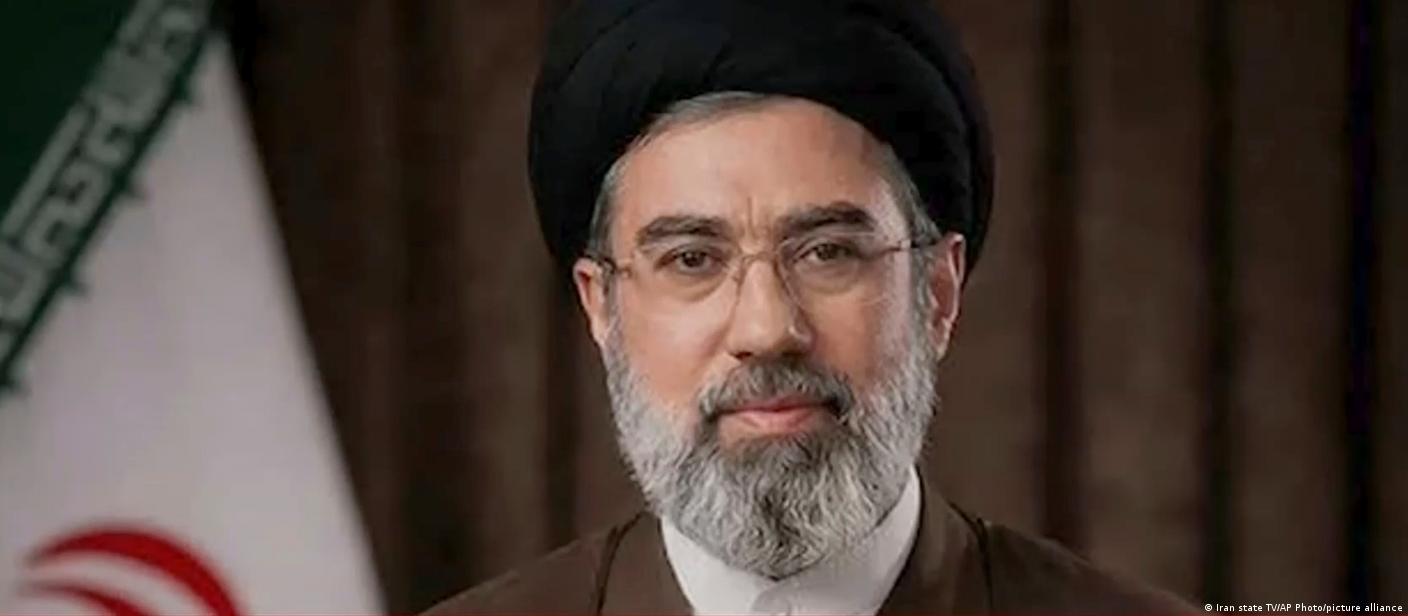
Iran’s newly appointed supreme leader, Mojtaba Khamenei, has ordered the continued closure of the strategic Strait of Hormuz, escalating tensions in the ongoing Middle East conflict and sending global oil prices surging.
The directive came as the leader, who was reportedly injured in a recent airstrike, delivered a defiant message broadcast on Iranian state television. Khamenei has not appeared publicly since he was nominated as supreme leader last Sunday following the death of his father, Ali Khamenei, who was killed during the first wave of attacks carried out by the United States and Israel at the start of the current Middle East war.
In the message, Khamenei insisted that blocking the Strait of Hormuz — a vital route through which about a quarter of the world’s oil and liquefied natural gas usually passes — should remain a key strategy.
“The lever of blocking the Strait of Hormuz must definitely be used,” he said, adding that Iran’s retaliation against the United States and Israel had already begun but would continue until its objectives were fully achieved.
The latest escalation came as Iran launched a new wave of attacks on energy infrastructure across Gulf countries on Thursday, briefly pushing global oil prices above $100 per barrel and raising fears of a historic disruption to global supply.
Despite concerns about the economic consequences, US President Donald Trump said preventing Iran from acquiring nuclear weapons remained his top priority.
Writing on social media, Trump said stopping what he described as Iran’s “evil empire” was more important than the effect the conflict might have on oil prices.
Meanwhile, the conflict has continued to spread across the Gulf region. In Muharraq, thick smoke was seen rising after a strike hit fuel storage tanks, forcing authorities to advise residents to remain indoors and shut their windows.
Drone strikes also caused damage near the international airport in Kuwait City and in downtown Dubai. Saudi Arabia said it intercepted drones heading toward the Shaybah oil field and the diplomatic district where foreign embassies are located.
Shipping around the Strait of Hormuz has nearly stopped, with several vessels reportedly attacked in Gulf waters near the United Arab Emirates and Iraq.
The International Energy Agency warned that the 13-day conflict could trigger the largest disruption in global oil supply ever recorded, potentially surpassing the energy crises of the 1970s.
Since the start of the conflict on February 28, oil prices have climbed by as much as 40 to 50 percent as production in several Gulf states slowed and tankers remained stranded in the region.
Military tensions have also intensified on the ground. Iranian military officials warned that the country could sustain a prolonged conflict that might severely damage the global economy.
Analysts say the crisis could develop into a war of attrition between Iran and the US-Israel alliance.
According to Pierre Razoux of the Mediterranean Foundation for Strategic Studies, Iran may pursue a prolonged confrontation to retaliate against the attacks.
The conflict has also spread to neighboring countries. In Beirut, Israeli airstrikes have killed hundreds of people, while the Iran-backed Hezbollah announced new operations against Israel.
Authorities say more than 687 people have been killed in Lebanon so far, with over 800,000 residents displaced.
In Iran, the United Nations High Commissioner for Refugees reported that more than three million people have been displaced since the war began.
Read Also;
China Says Iran’s Choice of New Supreme Leader Is Internal Matter
Meanwhile, satellite images suggest that Israeli forces carried out new strikes on the Parchin Military Complex southeast of Tehran, reportedly targeting facilities linked to nuclear weapons development.
The war has already taken a heavy toll. Iran’s health ministry reported that more than 1,200 people have been killed since the conflict began, though the figure has not been independently verified.
Authorities in Israel say at least 14 people have died from Iranian attacks, while incidents across the Gulf region have left 24 others dead, including civilians and US military personnel.
The conflict has also placed a heavy financial burden on Washington. According to reports presented during a Pentagon briefing, the war has already cost the United States more than $11.3 billion.