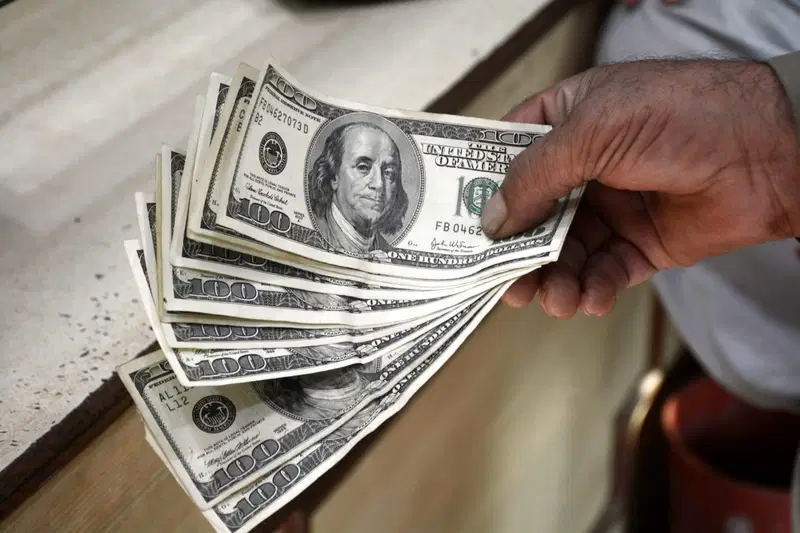
The Nigerian naira started the first full trading week of April 2026 on a relatively stable note against the US dollar, showing signs of resilience despite ongoing global and domestic pressures.
At the official market, the currency recorded only slight movement. Early trading on Monday saw the naira exchange at around ₦1,377.80 to the dollar, a modest improvement from the ₦1,380.79 recorded at the close of last week. This steady performance reflects continued support from recent reforms aimed at boosting liquidity, alongside the Central Bank of Nigeria’s tight monetary policy stance.
Activity in the official window remains strong, helped by improved transparency in the trading system. These measures have played a role in keeping the exchange rate relatively stable, even as the dollar maintains global strength.
In the parallel market, the naira also held firm. Across key cities like Lagos, Abuja, and Kano, the dollar traded between ₦1,405 and ₦1,415. Although there is still a gap between the official and informal markets, the difference has reduced significantly compared to previous periods. Analysts attribute this to better coordination in foreign exchange supply, including the inclusion of bureau de change operators in the official system.
Read Also;
Dollar to Naira exchange rate today, April 3, 2026
Several key factors continue to shape the naira’s performance. Nigeria’s foreign reserves remain under close watch, with projections pointing to gradual growth supported by oil earnings and foreign inflows. At the same time, high interest rates—currently at 26.5%—are helping to attract investors and stabilise the currency.
Reforms in the remittance sector are also making an impact, as more diaspora funds are now flowing through official channels, improving dollar availability in the system.
Looking ahead, the naira is expected to trade within the ₦1,370 to ₦1,390 range in the official market in the near term. Market watchers will be paying close attention to global oil prices, foreign inflows, and