Nearly two years after the Supreme Court granted financial autonomy to Nigeria’s 774 local government councils, implementation of the landmark judgment remains largely stalled, even though councils have received more than ₦10.48 trillion in federal allocations during the period.
An analysis of Federation Account Allocation Committee (FAAC) reports, alongside data from the National Bureau of Statistics and the Office of the Accountant-General of the Federation, shows that local governments received ₦10.479 trillion between the July 2024 and June 2026 FAAC meetings.
The allocations covered revenue generated from June 2024 to May 2026, as FAAC distributes each month's earnings in the following month.
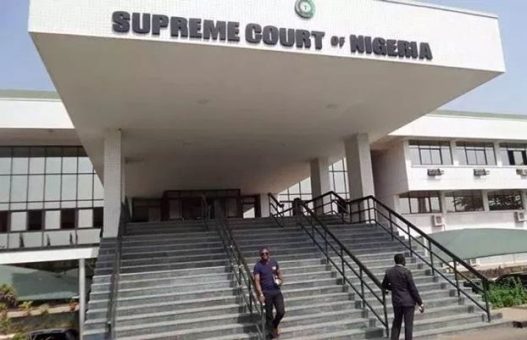
The Supreme Court, in a judgment delivered on July 11, 2024, directed that allocations meant for local governments should be paid directly into their accounts. The court also barred state governments from withholding or spending council funds and declared the use of unelected caretaker committees to run local governments unconstitutional.
Despite the ruling, uncertainty remains over whether councils now receive their allocations directly, whether the State Joint Local Government Accounts are still in operation, and whether local governments have genuine financial control.
Allocations increased
The analysis shows that local government allocations rose significantly in the second year after the judgment.
Between July 2024 and June 2025, councils received ₦4.496 trillion.
Between July 2025 and June 2026, the figure increased to ₦5.984 trillion, representing an increase of ₦1.488 trillion, or 33.1 per cent.
Average monthly allocations also rose from ₦374.65 billion to ₦498.67 billion during the period.
Overall, FAAC distributed ₦42.709 trillion among the Federal Government, state governments, local governments and oil-producing states over the 24 months.
The Federal Government received ₦14.62 trillion, states received ₦14.506 trillion, local governments got ₦10.48 trillion, while oil-producing states received ₦3.103 trillion as derivation revenue.
Questions over autonomy
Although allocations have increased, there is little evidence that the Supreme Court's order has been fully implemented across the country.
The State Joint Local Government Account, created under the 1999 Constitution, has long been criticised for allowing state governments to control funds meant for councils.
The Supreme Court ruling was expected to end that arrangement by ensuring direct payments to democratically elected local governments. However, many observers say the relationship between states and councils has changed very little.
The issue has also resurfaced following calls by residents of Oriire Local Government Area in Oyo State, where recently rescued pupils and teachers have demanded improved security, better roads, healthcare facilities and communication infrastructure.
Residents questioned why basic services remain poor despite years of federal allocations to local governments.
NULGE says nothing has changed
The National Union of Local Government Employees (NULGE) said the Federal Government has yet to begin paying allocations directly to councils.
NULGE National President, Aliyu Kankara, said the union had repeatedly written to the Federal Government, urging it to comply with the Supreme Court judgment.
"Up till now, they have not started the implementation of financial autonomy," he said.
He added that state governments still receive local government allocations, insisting that true autonomy cannot exist until councils receive their funds directly.
States tell different stories
Findings across several states revealed mixed levels of compliance.
In Kaduna, local government officials said councils still operate under the State Joint Local Government Account and only receive funds approved by the state government.
A council official said that although FAAC reports may show hundreds of millions allocated to a local government, only a fraction eventually reaches the council.
Officials in Kano also confirmed that the state still controls local government allocations, with council chairmen required to obtain approval before executing projects.
In Benue, local government officials argued that autonomy would remain difficult until the constitutional provision establishing the joint account is amended.
Officials in Plateau and Sokoto similarly said councils had not begun receiving direct allocations and remained financially dependent on their state governments.
In Abia, local governments operate independent bank accounts, but officials said the Federal Government has yet to provide clear guidance on implementing the Supreme Court judgment.
Jigawa claims full implementation
Jigawa State appears to be one of the few exceptions.
The Chairman of the Association of Local Governments of Nigeria (ALGON) in the state, Sibu Abdullahi, said all 27 local government councils now receive their allocations directly from the Federal Government without deductions by the state.
According to him, councils also operate independent accounts, allowing them to respond more quickly to community needs and improve transparency.
He added that Jigawa's model could serve as an example for other states seeking to implement local government financial autonomy.
The differing experiences across the country highlight the uneven implementation of the Supreme Court ruling, with many councils still waiting for the financial independence envisioned by the judgment.