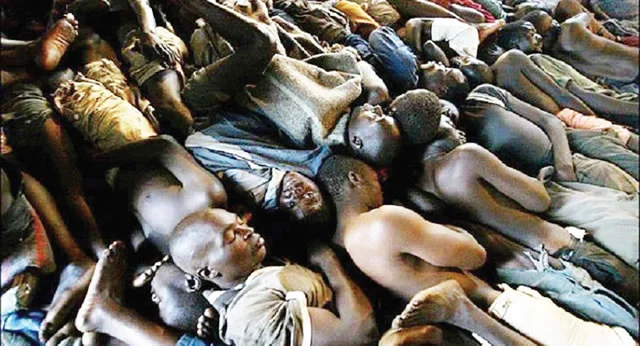
The Nigeria Correctional Service (NCoS) has disclosed that awaiting trial inmates now make up 64 per cent of the country’s total custodial population, a situation that continues to worsen congestion in correctional facilities nationwide.
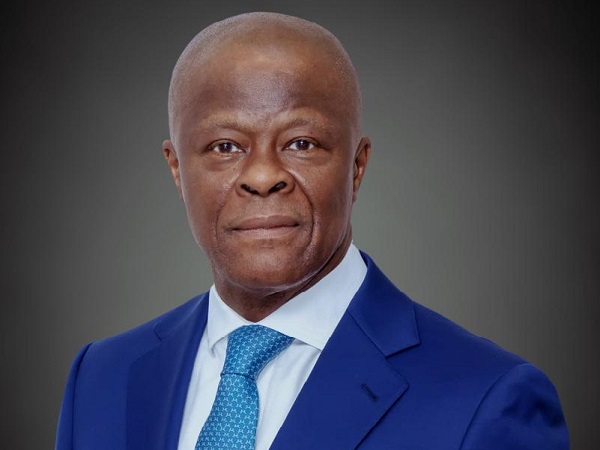
The Controller-General of the Service, Sylvester Nwakuche, revealed this on Wednesday while defending the agency’s 2025 budget performance and presenting its 2026 budget proposal before the House of Representatives Committee on Reformatory Institutions at the National Assembly in Abuja.
According to Nwakuche, as of February 9, 2026, Nigeria’s total inmate population stood at 80,812. Out of this figure, 51,955 inmates are awaiting trial, 24,913 are convicted, while 3,850 fall under other categories of detention.
He explained that the figures reflect the growing pressure on custodial centres across the country, many of which were built decades ago and are now operating beyond their intended capacity.
Nwakuche described the Correctional Service as an important part of the criminal justice system, responsible for custodial and non-custodial operations, safe custody of detainees, as well as rehabilitation and reintegration of inmates into society.
He also noted that the agency is required to ensure inmates are properly fed in line with the United Nations Minimum Standard Rules for the Treatment of Offenders.
2025 Budget Performance
Speaking on the agency’s financial performance in 2025, the Controller-General said the Service received a total budget allocation of ₦184.63 billion for personnel, overhead and capital projects.
Out of ₦124.31 billion approved for personnel costs, ₦112.68 billion (90.6 per cent) was released and fully used for salaries, pensions and health insurance contributions.
He added that recurrent overhead releases stood at 73.7 per cent, with the final release for October 2025 only received in December.
Nwakuche stated that ₦27.28 billion (71.7 per cent) was spent on feeding inmates nationwide, while outstanding feeding obligations amounted to ₦10.75 billion.
He further said ₦6.49 billion was spent on operational expenses such as staff training, fueling of vehicles used for court duties, electricity supply, security services and maintenance of facilities.
However, capital funding recorded the weakest performance. Of the ₦14.50 billion allocated for capital projects, only ₦3.22 billion (22.2 per cent) was released, leaving ₦11.27 billion unreleased.
He stressed that capital funding is essential for rehabilitation and construction of custodial centres, procurement of vehicles, security equipment, ICT infrastructure, biometric capture systems and agricultural support for prison farms.
Despite being a non-revenue generating agency, Nwakuche disclosed that the Service generated ₦84.65 million internally in 2025.
He also revealed that the NCoS currently has 33,024 staff, including uniformed officers, medical personnel and civilian workers deployed across its headquarters, zonal offices, state commands and correctional facilities.
2026 Budget Proposal
For the 2026 fiscal year, the Controller-General presented a proposed budget of ₦198.85 billion and appealed for more funding to tackle major operational and infrastructural challenges.
He said the proposal includes personnel costs, overhead, feeding, operational expenses and capital expenditure for custodial and non-custodial operations.
Nwakuche explained that ₦138.30 billion was proposed for personnel costs to cater for an expected staff strength of 37,541 under four different salary structures.
He added that ₦50.40 billion was proposed for recurrent overhead costs, including inmate feeding. From that amount, ₦14.83 billion is planned for feeding an estimated 91,100 inmates at a daily rate of ₦1,125 per inmate.
The Controller-General also requested an additional ₦90.38 billion to strengthen capital funding, which would raise total capital allocation to about ₦100.50 billion to address infrastructure gaps and expand correctional capacity nationwide.
In addition, he sought a separate allocation of ₦37.99 billion for effective implementation of non-custodial measures across all 774 local government areas in Nigeria.
He also appealed for approval to clear outstanding liabilities, including ₦30.38 billion in promotion arrears from 2019 to 2024 and ₦25.16 billion owed to contractors for services rendered between 2023 and 2025.
Nwakuche reaffirmed the Service’s commitment to improving custodial security, rehabilitation programmes and reintegration efforts, while appreciating the committee for its support.
Reps Call for Urgent Reforms
Earlier, the Chairman of the House Committee on Reformatory Institutions, Chinedu Ogah, called for urgent reforms in the correctional system, including increased funding, improved infrastructure and presidential assent to the Correctional Service Trust Fund Bill.
Ogah described the Nigeria Correctional Service as a key national security institution but expressed concern over what he called poor budgetary attention despite its critical responsibilities.
He lamented that many custodial centres were built over 100 years ago and have deteriorated badly, contributing to recurring security breaches and heavy operational strain.
Ogah urged President Bola Tinubu to assent to the Correctional Service Trust Fund Bill already passed by the National Assembly, noting that it would strengthen constitutional provisions allowing states to establish correctional facilities and reduce pressure on federal centres.
Read Also;
THE BALLOT’S LAST WITNESS
He also highlighted efforts to improve inmate education, revealing that about 10 National Open University of Nigeria (NOUN) study centres have been created in correctional facilities nationwide.
According to him, such programmes have helped inmates gain education, graduate and return to society with renewed purpose.
Ogah encouraged private sector organisations to support correctional institutions through corporate social responsibility initiatives, adding that such support would help reduce reoffending and strengthen national security.
He concluded by stating that the committee would review the Service’s 2025 performance thoroughly before finalising deliberations on the 2026 budget proposal.