The Nigerian Supreme Council for Islamic Affairs has dismissed claims of a Christian genocide in Nigeria, calling the allegation false, dangerous and politically motivated.
The Council’s Secretary-General, Prof. Is-haq Oloyede, said this on Sunday during a press conference in Abuja, where he accused sections of the Western media and some foreign political actors of amplifying the claim as part of an organised attempt to destabilise Nigeria.
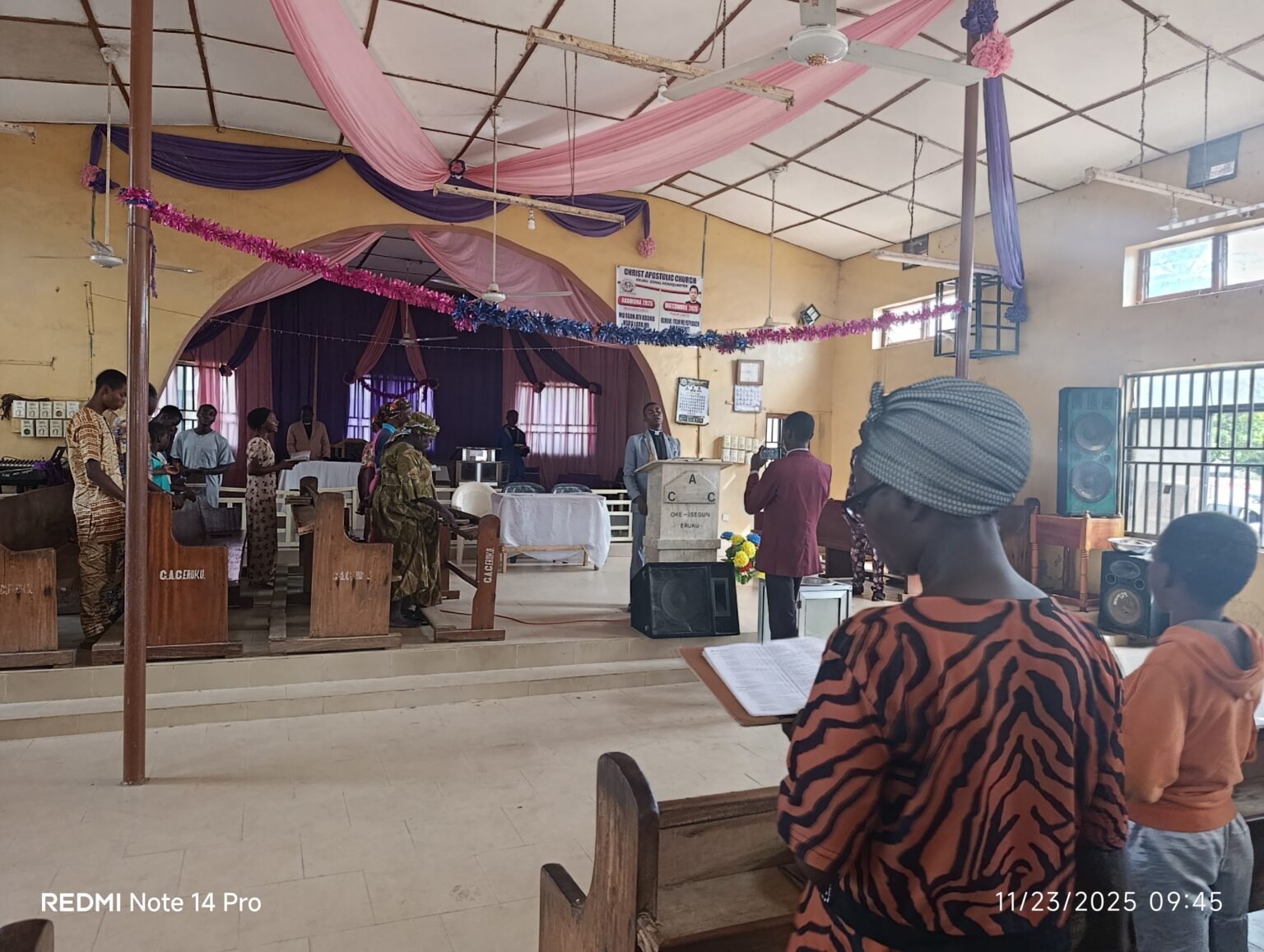
But the President of the Pentecostal Fellowship of Nigeria, Bishop Wale Oke, disagreed. During a visit to the Olubadan of Ibadan, Oba Rashidi Ladoja, he insisted that Christians were indeed being targeted.
“There is Christian genocide in Nigeria,” Oke said. “There is no other name to call it. No Christian group is attacking Muslims. The patience of the church is being stretched.”
The controversy follows the United States’ recent classification of Nigeria as a “Country of Particular Concern,” a designation that has gained even more attention after former U.S. President Donald Trump condemned killings in Nigeria and threatened possible military action if the federal government failed to halt attacks by extremist groups.
NSCIA dismisses religious-war narrative
Addressing journalists, the NSCIA argued that Nigeria’s violence is rooted in criminality, poverty, and climate-induced displacement — not religion.
“We affirm that in Nigeria, there is no Christian terrorism. There is no Muslim terrorism. There is no religious intolerance,” Oloyede said. “What we have are armed criminals exploiting weak governance while some groups abroad twist the story for geopolitical gain.”
He accused separatist groups, foreign lobbyists and U.S. politicians of pushing exaggerated numbers and doctored videos to influence Western governments.
According to him, the U.S. decision to label Nigeria a “Country of Particular Concern” was “a political tool, not a reflection of facts.”
The NSCIA urged both the Nigerian government and the international community to ignore what it described as a divisive narrative and called on Trump to help Nigeria with intelligence and logistics instead of “smear campaigns.”
PFN President counters: ‘Christians are being killed’
Speaking separately in Ibadan, Bishop Oke insisted the killings fit the definition of religious persecution. He noted that extremist groups such as Boko Haram and ISWAP often invoke Islam when carrying out attacks, even though they do not represent the broader Muslim population.
Listing cases such as the killing of Deborah Samuel, the abduction of Leah Sharibu, the Chibok girls, and attacks in Southern Kaduna, Benue, Taraba, Owo, Plateau and Niger states, he said hundreds of Christians and pastors had died.
While thanking Trump for drawing attention to the crisis, he cautioned against military intervention, urging the U.S. instead to support President Bola Tinubu’s administration in combating extremist groups.
“Tinubu should seek cooperation from Trump, not confrontation,” he said. “The government should stop playing politics with this matter.”
Olubadan laments years of killings
According to a statement by his media aide, Adeola Oloko, the Olubadan, Oba Ladoja, expressed sympathy with the Christian community, noting the devastating impact of years of violence — from killings to mass displacement and kidnappings.
He pointed out that in the South-West, Muslims and Christians coexist peacefully, adding that Nigerians must resist attempts to divide the country along religious lines.
APC chieftain warns against foreign troops
Meanwhile, an APC chieftain in Osun State, Olatunbosun Oyintiloye, warned on Sunday that Nigeria must never accept foreign soldiers on its soil.
He urged political and religious leaders to avoid using Trump’s comments to attack President Tinubu, saying national unity was more important than political point-scoring.
Read Also;
Islamic Affairs Council denies Christian genocide claims in Nigeria
“At this critical time, Nigerians must support the President,” he said. “Foreign military boots could complicate the problem.”
He stressed that terrorism in Nigeria has affected people of all religions, and called for international support in intelligence and equipment rather than troop deployment.
Tinubu moves to avoid confrontation with U.S.
The federal government has begun consulting widely to avoid escalating tensions with Washington. As earlier reported, President Tinubu said his administration is handling the matter through diplomatic channels.