
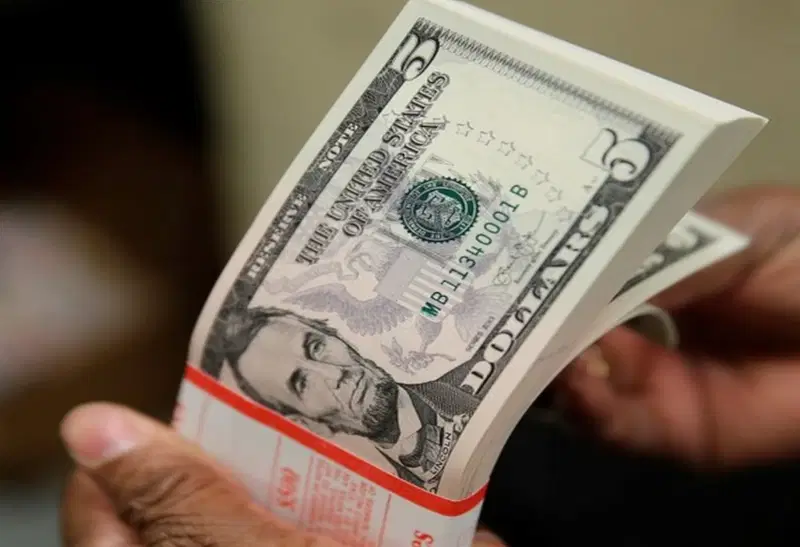
The Nigerian naira has started the new year on a relatively stable footing in the foreign exchange market, holding within a narrow range against the United States dollar.
As of January 1, 2026, the currency continues to experience moderate volatility, as the Central Bank of Nigeria maintains its focus on liquidity management and transparency through the Nigerian Foreign Exchange Market (NFEM).
Official Market Performance
At the NFEM, the naira opened 2026 trading at an average rate of N1,445.99 to the dollar. This reflects the mild appreciation recorded towards the end of December 2025, when the exchange rate moved between N1,445 and N1,470. Data from the final trading day of 2025 shows the naira closing at about N1,445.24, slightly stronger than levels seen earlier in the month.
Market watchers note that daily turnover at the official window remains a key indicator for investor confidence. The CBN has continued efforts to ensure that legitimate foreign exchange demands—such as payments for school fees, medical bills and other invisible transactions—are met through authorised banking channels.
Parallel Market Trends
In the parallel market, the dollar continues to trade at a premium, a trend commonly observed during the holiday season. Current rates range between N1,480 and N1,510 per dollar, depending on location and transaction size.
Although the gap between the official and parallel markets has narrowed significantly compared to previous years, a spread of about 3 to 5 per cent remains. Traders attribute this difference largely to increased cash demand from travellers and small-scale importers who operate outside the formal NFEM structure.
Read Also;
Naira Ends 2025 on a Strong Note, Closes at N1,435.75/$
Macroeconomic Outlook
Looking ahead, analysts say the naira’s performance in 2026 will largely depend on global oil prices and the effectiveness of ongoing monetary policy reforms by the CBN. Recent macroeconomic reports from the apex bank suggest that foreign exchange pressures could ease further in the months ahead, supported by reforms aimed at attracting private investment and strengthening currency stability.
Experts add that sustained growth in FX inflows could help the naira consolidate further, reduce arbitrage opportunities and create a more predictable operating environment for businesses across the country.