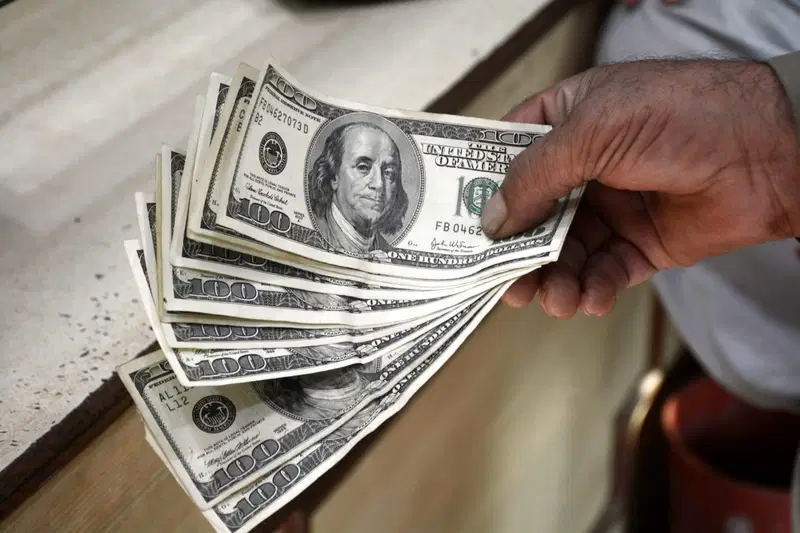

The Nigerian naira opened the new trading week on a stable note against the United States dollar in the early hours of Monday, January 19, 2026, reflecting growing calm in the foreign exchange market after months of volatility.
At the official Nigerian Foreign Exchange Market (NFEM), the naira traded at an average rate of ₦1,420.59 to the dollar at the start of the day. This marked a modest improvement from last week’s closing levels, where the currency hovered around ₦1,422. Early trading showed the naira touching a high of ₦1,422.59 before firming up, translating to a marginal 0.14 per cent gain within the first few hours of activity.
Market watchers say the steady performance is being supported by the Central Bank of Nigeria’s sustained liquidity management measures, as well as improving investor sentiment. Analysts also point to Nigeria’s external reserves, which are projected to rise above $50 billion later in the year, as a key factor helping to stabilise the currency.
In the parallel market, also known as the black market, the naira remained largely stable but continued to trade at a premium compared to the official window. Bureau de Change operators in major cities such as Lagos and Abuja quoted buying rates between ₦1,465 and ₦1,470 per dollar, while selling rates ranged from ₦1,472 to ₦1,475.
Although the gap between the official and parallel markets persists, traders note that the sharp swings seen in 2024 and much of 2025 have eased considerably. The narrowing spread is widely attributed to recent exchange rate reforms, improved access to foreign exchange, and rising diaspora remittances.
Read Also;
Dollar to Naira exchange rate today, January 16, 2026
Looking ahead, economic managers and analysts remain cautiously optimistic about the naira’s outlook in 2026. Finance Minister Wale Edun recently said the economy has entered a consolidation phase, with inflation expected to average about 16.5 per cent this year—significantly lower than levels recorded two years ago.
The Central Bank’s policy arm has also projected further stabilisation of the currency, supported by higher oil earnings and ongoing structural reforms. As the week unfolds, attention will turn to upcoming monetary policy meetings, which are expected to offer clearer signals on interest rates and the future direction of foreign exchange management.