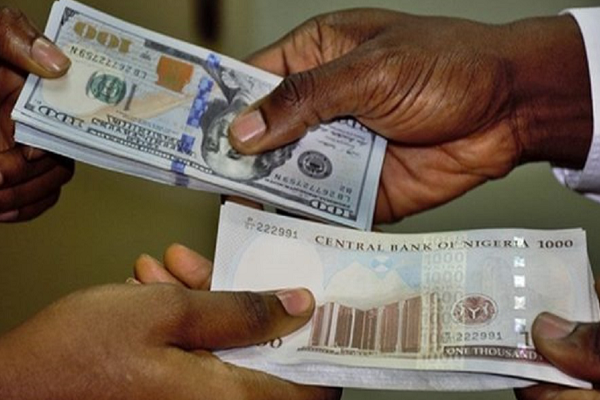
As trading closed for the week on Friday, March 13, 2026, the Nigerian naira remained largely stable against the US dollar, reflecting continued balance in the country’s foreign exchange market. Data from the Nigerian Foreign Exchange Market (NFEM) and informal currency traders showed the local currency holding firm within a narrow range, supported by steady liquidity and active market management by the Central Bank of Nigeria.
At the official market window, the naira opened trading at ₦1,398.74 to the dollar in the early hours of the day. By around 3:00 a.m. WAT, the rate slightly improved to ₦1,398.63 per dollar, representing a marginal appreciation of about 0.01 percent. The movement reflects a calm trading session following moderate fluctuations earlier in the week.
The Central Bank of Nigeria has continued to implement its “willing-buyer-willing-seller” policy framework, which allows authorised dealers to trade foreign exchange based on market demand and supply. Analysts say the model has helped narrow pricing gaps in the market and improve transparency in currency transactions.
Market turnover during the week remained strong, with the average official exchange rate hovering around the ₦1,395 mark. This stability has provided a more predictable environment for businesses involved in international trade and financial planning.
In the parallel market, the naira closely mirrored the performance of the official window. Currency traders across major commercial centres such as Lagos, Abuja, and Kano reported that the dollar traded between ₦1,405 and ₦1,415.
The difference between the official and parallel market rates remained narrow at roughly 1 to 1.2 percent. Market operators attribute this to the consistent supply of foreign currency to Bureau De Change operators, which has helped meet retail demand for travel allowances and small business transactions. The improved supply has also reduced speculative buying that previously pushed black-market rates significantly higher.
Several economic indicators continue to support the naira’s relative stability. Nigeria’s external reserves have remained strong, recently surpassing the $50 billion mark, providing the central bank with sufficient capacity to intervene when necessary.
Inflation has also shown signs of easing, with the latest data placing headline inflation at about 15.10 percent. Economists say this disinflation trend has strengthened confidence in the local currency among both domestic and foreign investors.
Read Also;
OPay Denies Reports of Office Closure Over Tax Issues
Reforms in the energy sector have also played a role. Increased output from local refineries has helped reduce the country’s dependence on fuel imports, which historically placed heavy pressure on foreign exchange demand.
In addition, crude oil production has remained relatively steady at around 1.46 million barrels per day, ensuring a consistent inflow of foreign currency into the economy.
As the market heads into the weekend, analysts expect the naira to close the week within the ₦1,395 to ₦1,405 range. Attention will now turn to developments in global financial markets, particularly signals from the Federal Reserve in the United States, which could influence the strength of the dollar against emerging market currencies in the coming week.