The Economic Community of West African States (ECOWAS) has officially declared a state of emergency across the region, citing rising political instability, security threats, and worsening humanitarian conditions.
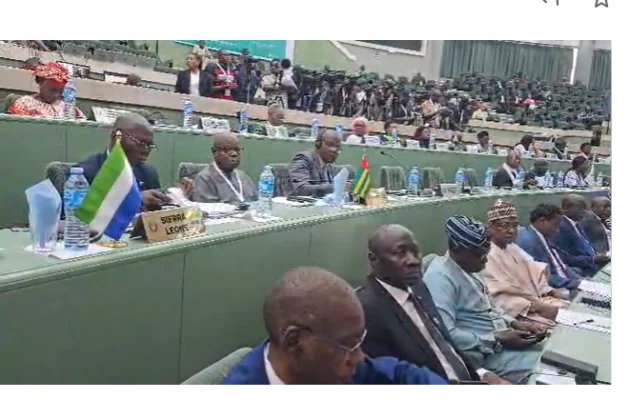
The announcement was made on Tuesday in Abuja by the President of the ECOWAS Commission, Omar Touray, during the 55th Session of the Mediation and Security Council at the ministerial level.
Touray warned that recent events show the urgent need for deep reflection on the future of democracy in the region, as well as immediate investment in collective security.
He noted that assessments presented to ministers reveal that most ECOWAS member states currently fall within a “high-risk” category, with threats ranging from attempted coups to terrorism and political exclusion.
According to him, “The risk factors include persistent military interventions, as recently seen in Guinea-Bissau and the Republic of Benin; stalled political transitions in countries like Guinea; shrinking electoral inclusivity; expanding terrorist networks; and increasing geopolitical pressure affecting regional unity.”
Touray stressed that elections have now become a major trigger of instability in West Africa, adding that recent attempted coups and rising criminal activities demand a coordinated regional response.
Calling the situation unprecedented, he declared, “It is safe to say our community is in a state of emergency.”
He urged ECOWAS countries to pool their resources and increase collaboration against terrorism, banditry, and cross-border crimes that continue to destabilise the region. He also called for more frequent meetings of the Mediation and Security Council over the next year.
Touray highlighted worsening humanitarian conditions, referencing new UNHCR data showing that as of October 2025, about 7.6 million people across West Africa are forcibly displaced — most of them in Nigeria, Burkina Faso, Niger, and Mali.
He insisted that the region must take urgent decisions to reverse this trend and reaffirmed ECOWAS’s commitment to protecting its citizens.
Sierra Leone’s Minister of Foreign Affairs and Chair of the Council of Ministers, Timothy Kabba, also spoke during the session. He described the recent coups and attempted coups in the region as warning signs of the fragility of democracy in West Africa.
Read Also;
Senate Approves Tinubu’s Request to Deploy Troops to Benin
Kabba said ECOWAS must move beyond statements and produce decisions that restore confidence, adding that citizens are tired of empty promises and expect real action to protect peace and security.
The ministerial meeting precedes the upcoming gathering of ECOWAS Heads of State and Government, who are expected to review the recommendations and decide on stronger measures to stabilise the region.
West Africa continues to face an escalation in political crises, with Mali, Burkina Faso, Niger, and Guinea-Bissau all under military rule, while Benin recently survived an attempted takeover. These developments reflect growing threats to democratic governance and the increasing influence of armed groups across the region.