
By Evans Ufeli Esq
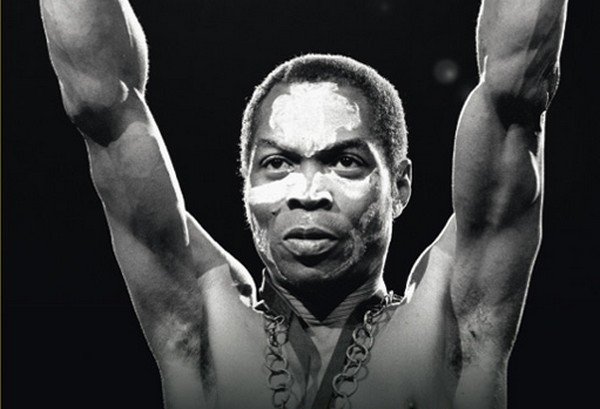
Fela Anikulapo Kuti stands as a colossus in the landscape of modern music; not merely a brilliant performer but a sovereign architect who carved a new continent of sound and meaning out of the bedrock of African rhythms. To claim that any contemporary star, of the Afrobeat genre like Wizkid, however gifted, could be "greater" than Fela in any meaningful sense is to misunderstand what greatness means: it is not only chart positions or streaming numbers, but origination, courage, cultural authorship, and a moral voice that reshaped history. Fela did all of these. He did them first, and he did them with a ferocity and integrity that makes comparison with later practitioners a category error.
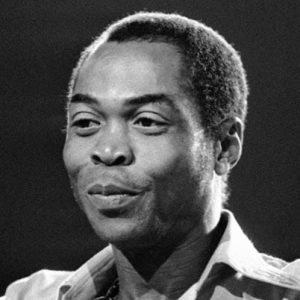
At the heart of Fela's claim to preeminence is invention. Afrobeat is not a mere stylistic tweak or a fashionable export; it is a sui generis musical system; a sumptuous amalgam of Yoruba polyrhythms, highlife, jazz improvisation, soul, and funk; ordered by relentless grooves, interrogative horn lines, and marathon suites that dissolve the boundary between composition and political liturgy. Fela did not inherit Afrobeat: he invented it. Like a composer-statesman, he named it, refined its grammar, and taught generations to recognize its cadences. That act of creation is singular. It is the founding of a language in which an entire continent learned to speak back to power.

Equally central to Fela’s greatness is the moral spine of his music. Where many entertainers offer escapism, Fela weaponized rhythm as protest. His songs were indictment and court of public opinion in one; blistering denunciations of military despotism, corrupt elites, and neo-colonial complicity. He sang with the authority of someone who had put his body on the line: beaten in the streets, jailed repeatedly, his compound raided, his mother mortally injured in an attack by soldiers. It is one thing to protest; it is another to live it. The lived danger of Fela’s work; the personal cost he endured to refuse silence; elevates his music from entertainment to civic sacrament.
There is also an elemental ownership to Fela’s legacy. He named his band, controlled the arrangements, built the Kalakuta Republic as a political and artistic commune, and crafted a public persona that was inseparable from his art. Ownership here is not merely legal or economic; it is cultural stewardship. Fela maintained refusal: refusal to be domesticated by the industry, refusal to dilute his message for mass appeal, refusal to be apolitical. That rare combination of artistic autonomy and ideological clarity is what allowed Afrobeat to remain uncompromised even as it spread across the globe.
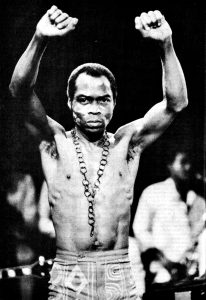
Musically, Fela’s achievements are formidable. His bands were tight, virtuosic machines where each horn figure, bass ostinato, and layered percussion part served a rhetorical thrust. Listeners were not simply dancing; they were being argued with, persuaded, and sometimes scolded; all through the hypnotic power of groove. The extended form of his compositions demanded patience and attention; they taught audiences to inhabit time differently, to trade the immediacy of the hook for the slow burn of revelation. That structural ambition is rare in popular music and marks Fela as a composer of grand scale.
The ripples of Fela’s influence are visible everywhere in contemporary music. From his children, who continue his band and mission, to artists across Africa, Europe, and the Americas who borrow his horn voicings, his syncopations, and his insistence that popular music can be a tool of conscience; the lineage is undeniable. But more than stylistic borrowings, Fela provided a template for how music could serve as a public pedagogy, a means of articulating identity and resistance in a postcolonial world.
Read Also;
150 DAYS AND A DAY OF SILENCE
To situate a contemporary pop star such as Wizkid alongside Fela is to confuse two different registers of cultural work. Wizkid is a brilliant practitioner of modern Afrobeats; a global pop phenomenon that blends catchy hooks, electronic production, and cross-border collaborations. His achievements are laudable within that field. But he stands on the shoulders of giants, and the fullest measure of Fela’s greatness is that he made the shoulders on which today’s stars stand.
In the end, greatness is cumulative but not fungible. Fela’s magnitude derives from origination, from a lifetime of daring that fused art and activism, from the creation of an enduring musical language and the sacrifice of personal safety in pursuit of truth. For those reasons, he occupies a different, loftier category than any successor could occupy by mere popularity. Fela did not only play music; he announced a revolution of sound and conscience. That is why his name will continue to tower, unassailable, in the pantheon of modern music.