
Petrol imports remained Nigeria’s main source of fuel supply in 2025, accounting for about 62 per cent of total Premium Motor Spirit (PMS) consumption, even as domestic refining improved during the year.
Data from the Nigerian Midstream and Downstream Petroleum Regulatory Authority (NMDPRA) show that Nigerians consumed roughly 18.97 billion litres of petrol in 2025. Of this volume, about 11.85 billion litres came from imports, while local refineries supplied around 7.54 billion litres, representing 37.5 per cent of total consumption.
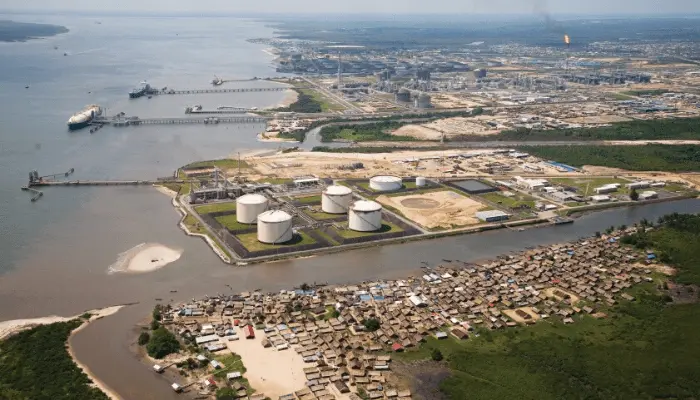
The figures highlight that despite the start-up and gradual ramp-up of domestic refineries—especially the Dangote Petroleum Refinery—Nigeria still relied heavily on imported fuel throughout the year. The regulator attributed this to factors such as the phased scale-up of refinery operations, crude supply constraints, logistics challenges, and fluctuating demand following full fuel price deregulation.
The Dangote Refinery accounted for nearly all locally refined petrol in 2025, supplying between 17 million and 32 million litres daily, depending on the month. Although the refinery recorded its strongest performance in December, when domestic supply rose to about 50 per cent of daily consumption, imports continued to bridge supply gaps in most months.
Overall petrol consumption fluctuated widely during the year, falling to its lowest point in September before peaking in December. Imports closely tracked these movements and remained the dominant source of supply, especially during periods of high demand.
Read Also;
Dollar to Naira exchange rate today, January 16, 2026
APC Rules Out Automatic Tickets as AFCON Ends and EFCC Petition Raises Fresh Questions
Industry experts note that while Nigeria has made clear progress in reducing its dependence on imported fuel, domestic refining capacity has not yet reached a level where imports can be eliminated. Analysts argue that the more accurate narrative is a gradual reduction in import reliance, rather than a complete end to fuel importation.
Looking ahead, stakeholders say sustained improvements in crude oil availability, refinery efficiency, and distribution infrastructure will be critical if Nigeria is to significantly cut fuel imports and strengthen energy security in the coming years.