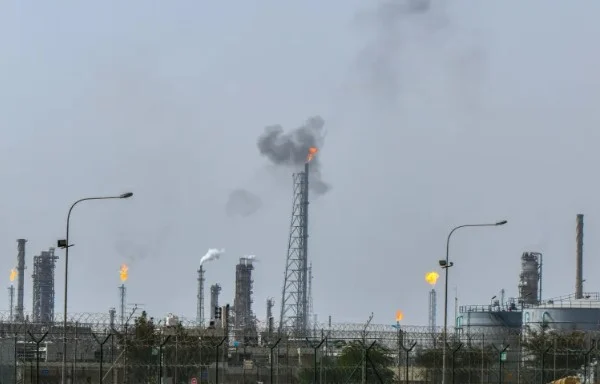
Firefighters battled a blaze at Kuwait’s giant Mina Al-Ahmadi oil refinery on Friday following a fresh drone attack, as Iran continued a wave of strikes across the Gulf and insisted its missile production remains unaffected.
The fire came a day after Iran targeted Qatar’s Ras Laffan gas facility in retaliation for an Israeli strike on its South Pars gas field, part of a wider escalation that has disrupted energy supplies and driven up oil and gas prices.
Israeli Prime Minister Benjamin Netanyahu claimed Tehran’s missile capacity had been severely diminished and suggested the conflict could end sooner than expected, while Iranian officials dismissed the claims and vowed to maintain missile production even under wartime conditions. Moments later, Iran’s Revolutionary Guards announced that the spokesman, Ali Mohammad Naini, had been killed in US-Israeli strikes.
The conflict has expanded across the region, with missile and drone attacks reported in the United Arab Emirates, Saudi Arabia, and Israel. Lebanon has also suffered heavy bombardment, with over 1,000 reported dead in Israeli airstrikes against Hezbollah-linked targets.
The attacks on Gulf energy infrastructure have triggered fears of long-term economic consequences. Experts warn that sustained damage to facilities like Ras Laffan, which could take years to repair, may create lasting price shocks and global inflationary pressures.
Read Also;
Yobe Hisbah Bans Mixed Gatherings, Night Events Over Security and Moral Concerns
President Donald Trump and Netanyahu have hinted at the possibility of a limited ground intervention to secure the Strait of Hormuz, a vital chokepoint for global oil and LNG flows. Meanwhile, oil prices have remained volatile, with Brent crude around $108 and West Texas Intermediate at about $94.
The timing of the escalation has cast a shadow over regional celebrations. Many communities in Lebanon, Iran, and across the Gulf marked the end of Ramadan and the Nowruz festival under the strain of war, displacement, and rising living costs, with ordinary citizens expressing fear and uncertainty amid ongoing hostilities.
Amid the turmoil, France’s President Emmanuel Macron announced plans to discuss with UN Security Council members a framework to secure navigation in the Strait of Hormuz once hostilities cease, highlighting the growing international concern over the conflict’s economic and strategic impact.