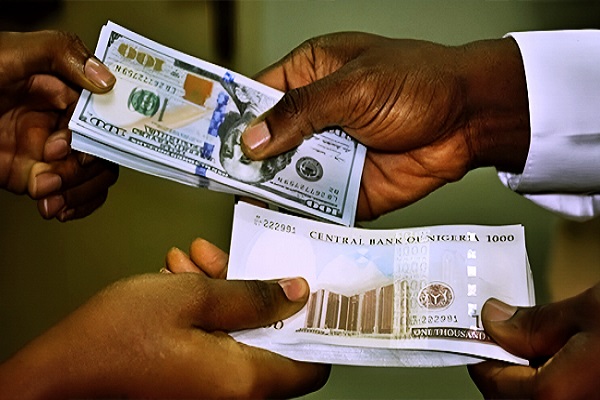
The Federal Government has proposed a sum of N135.22 billion in the 2026 budget to cover what it described as “electoral adjudication and post-election provisions,” signalling a significant financial commitment to handling disputes that often follow Nigeria’s elections.
The allocation appears in the House of Representatives’ Order Paper for March 31, 2026, under the Service-Wide Votes — a central pool of funds used to address obligations not tied to any specific ministry, department, or agency. This category typically caters to unforeseen expenses and cross-cutting national commitments.
The inclusion of such a large amount for post-election matters suggests that authorities are anticipating substantial legal and administrative costs arising from election-related disputes. The provision falls within the broader Consolidated Revenue Fund (CRF), where total charges stand at N3.70 trillion, meaning the electoral litigation budget accounts for about 3.65 percent of that segment.
This comes alongside a much larger N1.01 trillion statutory allocation to the Independent National Electoral Commission (INEC), which represents about 21 percent of total statutory transfers. These transfers are constitutionally backed and released directly to institutions like INEC, the National Assembly, and the judiciary, giving them a level of financial independence.
INEC had earlier indicated it would require N873.78 billion to conduct the 2027 general elections, alongside N171 billion for its 2026 operations — a sharp increase compared to the N313.4 billion spent on the 2023 elections.
However, the new N135.22 billion provision has sparked concern among opposition parties, civil society organisations, and policy experts.
Critics argue that budgeting heavily for post-election litigation raises questions about confidence in the electoral process. Some believe it suggests that disputes are being anticipated rather than prevented through credible and transparent elections.
Opposition voices have called for greater accountability, questioning both the size of the allocation and its purpose. While acknowledging that election-related court cases are common, they argue that such a large budget may be excessive if elections are conducted properly.
Political economist, Professor Pat Utomi, also questioned why the Federal Government should directly budget for election-related legal matters, noting that elections are contested by candidates and political parties, not the government itself.
Legal experts have similarly expressed doubts. Senior Advocate of Nigeria, Femi Falana, described the amount as disproportionately high, pointing out that INEC already has an internal legal structure and typically spends far less on litigation.
Read Also;
Tinubu Approves ₦3.3tn Plan to Clear Power Sector Debt, Boost Electricity Supply
Civil society groups say the development reflects deeper issues within Nigeria’s electoral system. According to them, the growing reliance on courts to determine election outcomes weakens public trust and shifts the focus away from the ballot box.
They argue that instead of allocating large sums to manage disputes, the government should prioritise reforms that ensure transparency, credibility, and efficiency in the electoral process — measures that would naturally reduce the need for litigation.
As preparations for the 2027 elections gather momentum, the debate around this allocation highlights broader concerns about electoral integrity, public confidence, and the true cost of democracy in Nigeria.