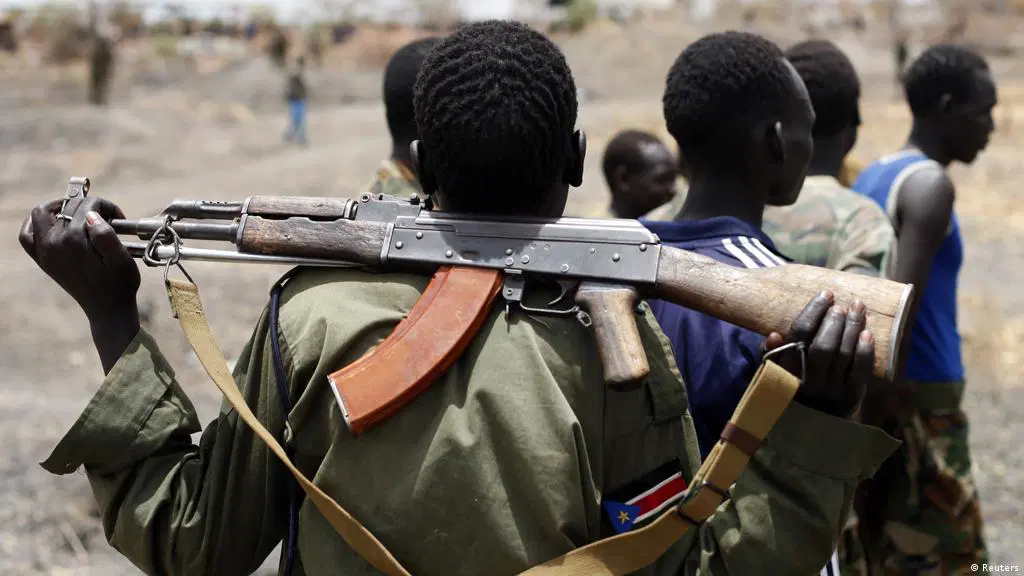
The National Assembly has intensified calls for stronger action against insecurity in Nigeria, urging the Federal Government to publicly expose and prosecute all individuals funding terrorism, banditry, and kidnapping across the country.
During Wednesday’s plenary, both the Senate and House of Representatives insisted that naming and prosecuting terror financiers is essential to curbing the worsening security situation nationwide.
In the Senate, lawmakers debated amendments to the 2022 Terrorism Prevention Act, including a proposal to classify kidnapping and related crimes as terrorism. The amendment, led by Senate Leader Opeyemi Bamidele, also seeks the death penalty for kidnappers, their informants, logistics suppliers, and anyone aiding or supporting kidnapping activities.
Bamidele explained that kidnapping has evolved into a highly organised, violent, and commercialised crime that now mirrors terrorism in its methods and impact. Senators Adams Oshiomhole, Orji Uzor Kalu, Abba Moro, and others backed the bill, stressing that only strict penalties would deter criminal networks.
The amendment passed its second reading and was referred to relevant committees for further work within two weeks.
At the House of Representatives, similar resolutions were adopted as part of a wide-ranging debate on rising insecurity. Lawmakers called for public naming of terror financiers, open and speedy terrorism trials, creation of a Special Court for terrorism, and stronger penalties for illegal arms trafficking.
They also recommended full funding of security agencies, expansion of digital payment systems to reduce ransom payments, improved intelligence sharing, tighter regulation of arms, and massive recruitment into the military and police.
Another major debate centred on President Tinubu’s directive to withdraw police escorts from VIPs. Some lawmakers supported the move, while others argued that only national officers and critical officials like governors and judges should retain police protection.
The House further proposed stronger protection for schools, markets, worship centres and other soft targets, including CCTV systems, rapid response units, and better implementation of the Safe Schools Initiative.
Meanwhile, former Chief of Defence Staff Gen. Christopher Musa, screened by the Senate for Defence Minister, vowed to investigate recent security lapses, including the withdrawal of troops before the abduction of 26 schoolgirls in Kebbi State. He promised to strengthen military operations, improve community engagement, and address funding gaps.
Read Also;
19 People, Including Five RSU Students, Kidnapped in Rivers and Imo States
Senate President Godswill Akpabio noted that global attention is currently focused on Nigeria’s security crisis, saying Nigerians deserve clear answers from security leaders.
In a separate development, the European Union Ambassador to Nigeria and ECOWAS, Gautier Mignot, reaffirmed the EU’s commitment to supporting Nigeria’s security, humanitarian response, and economic development. He highlighted major EU investments, including a €300m Northern stabilisation fund and increased humanitarian aid.
Nigeria continues to battle violent attacks, mass kidnappings, banditry, and terrorism, especially in the North-East, North-West, and Middle Belt regions. Recent attacks in Kaduna, Zamfara, and Benue—alongside rising school abductions—have heightened public concerns and displaced thousands of Nigerians.