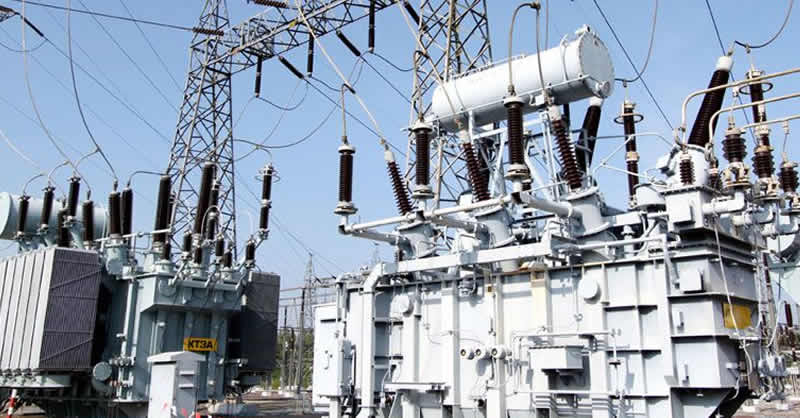
Nigeria’s national electricity grid collapsed on Monday afternoon after several major power plants suddenly lost generation, throwing large parts of the country into darkness.
Checks confirmed that the grid went down around 2:00 pm. Electricity generation, which had earlier peaked at about 4,800 megawatts, crashed sharply to just 139 megawatts by 3:00 pm.
The exact cause of the collapse was not immediately known. However, it came at a time when the Nigerian Independent System Operator (NISO) was working to ramp up power generation following recent gas supply challenges linked to pipeline vandalism.
At the time of the incident, all 22 power plants connected to the national grid reportedly lost generation. Restoration efforts later commenced, with some plants gradually returning to service. By 6:00 pm, Azura had restored 403 MW, Delta supplied 152 MW, Kainji added 120 MW, Okpai contributed 204 MW, and Omotosho came up with 30 MW, bringing total available generation to about 900 MW.
The Eko Electricity Distribution Company confirmed the system collapse and appealed to customers for patience.
“Kindly be informed that there was a system collapse at 14:01 hrs, which has resulted in a loss of power supply across our network. We are currently working with our partners as we hope for the speedy restoration of the grid. We will keep you updated as soon as the power supply is restored,” the company said.
The collapse came against the backdrop of weeks of unstable electricity supply caused by the vandalisation of the Lagos–Escravos–Lagos gas pipeline. Over the weekend, NISO had announced an improvement in power generation following repairs to the damaged pipeline and increased gas supply to key thermal power plants.
According to NISO, affected power plants had begun a cautious return to operation, with generation being increased gradually to protect the stability of the grid.
“Gradual power offtake is being carried out by the affected plants to ensure a smooth recovery and maintain the stability of both the gas supply network and the national electricity grid,” the system operator said.
Despite these efforts, Monday’s collapse appears to have set back the recovery process. NISO disclosed that more thermal power plants could come on stream once gas supply from producers is fully confirmed.
The operator said it is working closely with power generation companies, gas suppliers and regulators to sustain recent gains and respond quickly to operational challenges.
Last week, the Minister of Power, Adebayo Adelabu, assured Nigerians that electricity supply would stabilise within 24 to 48 hours after recent disruptions caused by gas shortages, though the situation remains uncertain.
Read Also;
National Grid Collapses as Power Generation Crashes Nationwide
Monday’s incident marks the second major grid collapse in 2025, following a year in which the grid reportedly collapsed 12 times. Grid failures often leave millions of consumers without power, disrupting businesses and daily life.
Over the past decade, the national grid has collapsed more than 100 times, according to reports by the Nigerian Electricity Regulatory Commission. Power sector advocate and convener of PowerUp Nigeria, Adetayo Adegbemle, has argued that the Federal Government must urgently address structural issues in the sector.
He said large electricity consumers have increasingly abandoned the national grid for alternative energy sources, placing a heavier burden on residential users.
“The government needs to bring bulk users back to the grid. Manufacturers are spending huge sums on alternative power. That money should be channelled into strengthening the national grid to ensure stability and reduce electricity costs,” Adegbemle said.