The Group Chief Executive Officer of the Nigerian National Petroleum Company Limited (NNPC), Bayo Ojulari, has revealed that Nigeria’s state-owned refineries were operating at what he described as a “monumental loss,” forcing his management team to halt operations to stop further financial damage.
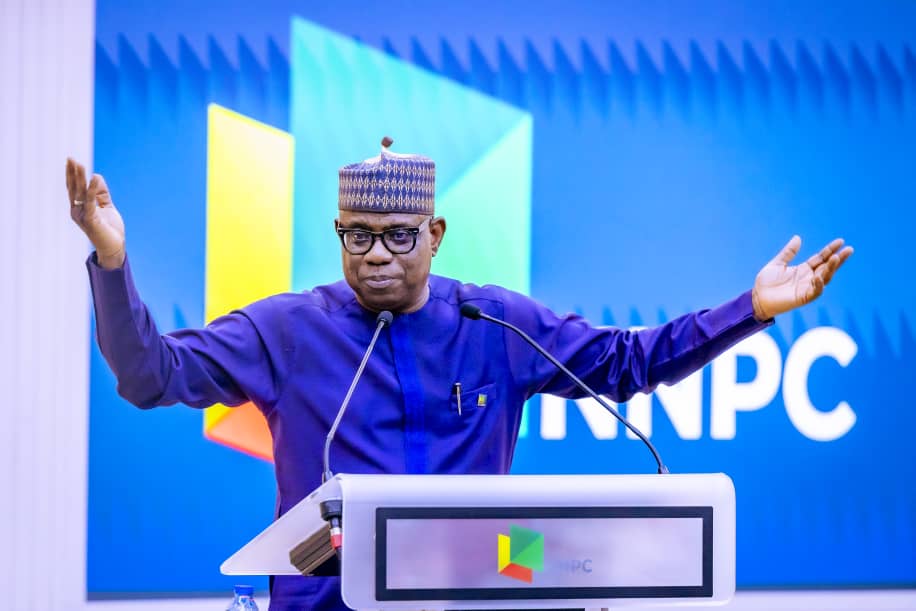
Ojulari made this disclosure on Wednesday in Abuja during a fireside chat titled “Securing Nigeria’s Energy Future” at the Nigeria International Energy Summit 2026. He explained that the decision was taken after a review showed the refineries were draining resources instead of adding value.
He admitted that Nigerians had every right to be angry, considering the huge amounts spent on refinery rehabilitation over the years and the expectations placed on the facilities.
“On the refineries, Nigerians were angry. A lot of money has been spent, and expectations were very high. So we were under extreme pressure,” he said.
Ojulari noted that refining was not his primary area of expertise, as most of his career was spent in the upstream sector, but said he had to quickly adapt because of the level of accountability involved.
“My background is upstream, so I was on a vertical learning curve. You are accountable, so you must learn very quickly,” he stated.
According to him, once the management team began a detailed assessment of the refinery operations, the financial losses became obvious.
“The first thing that became clear, and I want to say this very clearly, is that we were running at a monumental loss to Nigeria. We were just wasting money,” Ojulari said.
He revealed that NNPC had been supplying crude to the refineries monthly, yet the facilities were operating at only about 50 to 55 per cent capacity, while huge sums were still being spent on contractors and daily operations.
“We were spending a lot of money on operations, a lot of money on contractors. But when you look at the net, we were just leaking away value,” he explained.
Ojulari added that the most worrying issue was the lack of a clear plan to reverse the losses.
“Sometimes you make a loss during investment, but you have a line of sight to recovery. That line of sight was not clear here,” he said.
As a result, he disclosed that one of the first major decisions of his administration was to suspend refinery operations for a reassessment.
“We decided to stop the refinery and do a quick check. We planned that if things were lined up, we would reopen and work on them,” he stated.
He also blamed part of the losses on the quality of products being produced, citing the Port Harcourt Refinery where crude input reportedly yielded mid-grade products that were not commercially viable.
“The crude we were taking into Port Harcourt was producing mid-grade products. When you aggregate their value compared to what you put in, it was a waste,” he said.
Read Also;
Dangote Refinery Giving Nigeria “Breathing Space” — NNPC Boss
Ojulari acknowledged that the decision was politically sensitive, noting that NNPC had faced pressure in the past to keep refineries running for fuel supply continuity.
“There were political pressures to keep the refinery product, lots of pressure. But when you have been trained for over 35 years to focus on commerciality and profitability, you can’t sleep with that,” he added.
Nigeria’s four state-owned refineries — Port Harcourt (two plants), Warri, and Kaduna — have long struggled with poor performance despite repeated turnaround maintenance efforts costing billions of dollars.
Ojulari’s remarks stand out as one of the clearest admissions from an NNPC leader that under existing conditions, keeping the refineries running was economically unjustifiable, highlighting a growing push for commercial discipline under the Petroleum Industry Act.