
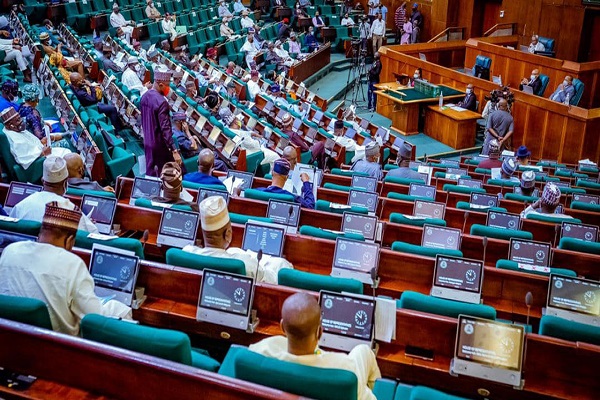
The House of Representatives Committee investigating alleged discrepancies in Nigeria’s gazetted tax laws has assured that it will submit its report to the House as soon as its work is completed.
The committee’s chairman, Muktar Betara, gave the assurance on Wednesday after the panel held its inaugural meeting in Abuja on Tuesday. The seven-member committee was set up by the House following the adoption of a matter of privilege raised two weeks ago by a Sokoto State lawmaker, Abdussamad Dasuki.
Dasuki had drawn the attention of the House to what he described as serious inconsistencies between tax laws passed by the National Assembly and versions later gazetted and circulated, including copies found within government offices. He alleged that some provisions in the gazetted laws were materially different from what lawmakers approved, a situation he said could amount to a breach of legislative procedure and the rule of law if proven.
In a statement released on Wednesday by the committee’s media unit, Betara said members were determined to carry out the assignment diligently and without unnecessary delay.
“The committee has resolved to conclude its investigation and submit its report to the House within the shortest possible time,” he said, adding that the goal was to protect legislative integrity, due process and public confidence.
Betara also assured that the committee’s findings and recommendations would be presented to the House immediately after the investigation is concluded.
The probe comes amid growing public and institutional scrutiny of Nigeria’s tax laws, especially those amended or introduced through recent Finance Acts. Over the years, Finance Acts have been used to revise several tax statutes, including the Companies Income Tax Act, Value Added Tax Act and Customs and Excise laws, as part of broader revenue and economic reforms.
Read Also;
FG Accuses ‘Saboteurs’ of Spreading Misinformation on Tax Reforms
Lawmakers have expressed concern that any post-passage alteration of these laws could undermine the legislative process, create legal uncertainty and expose taxpayers to financial and legal risks.
The House has maintained that only laws duly passed by the National Assembly and assented to by the President have legal force. Any changes made outside this process, it stressed, would violate constitutional governance.
The committee’s report is expected to clarify whether discrepancies truly exist, how they occurred, who may be responsible and what steps should be taken to prevent similar issues in the future.