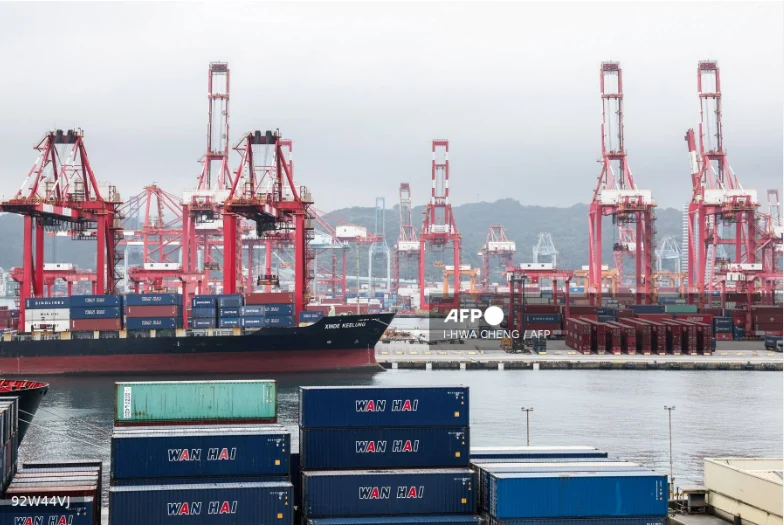
Taiwan has vowed to retain its position as the world’s leading producer of artificial intelligence chips following a major trade agreement with the United States that cuts tariffs on Taiwanese exports and encourages massive new investment in US-based semiconductor production.
Under the deal, Washington will reduce tariffs on Taiwanese goods to 15 per cent, down from the previous 20 per cent rate introduced to address trade imbalances. In return, Taiwanese technology and chip companies are expected to significantly expand their investments in the United States, particularly in advanced semiconductors and AI-related manufacturing.
Taiwanese Premier Cho Jung-tai hailed the agreement as a major success after months of negotiations, describing it as a “well-executed home run” that reflects the hard work of both sides.
Despite plans to shift more production to American soil, Taiwan insists its dominance in the global chip industry will remain intact. Economic Affairs Minister Kung Ming-hsin said Taiwan would continue to be the most important hub for AI semiconductor production worldwide. He projected that by 2030, about 85 per cent of advanced AI chips would still be produced in Taiwan, with the remaining 15 per cent made in the United States. By 2036, the split is expected to move to 80–20.
The deal comes amid growing global concern over the concentration of chip manufacturing in Taiwan, especially given tensions with China, which claims the island as part of its territory. Taiwan’s chip industry has long been viewed as a “silicon shield,” offering both economic leverage and strategic protection. However, fears of supply chain disruption have intensified calls for diversification of production locations.
The United States sees the agreement as a step toward rebuilding its domestic semiconductor industry. According to the US Commerce Department, the deal will help drive the reshoring of chip manufacturing and strengthen America’s technological self-sufficiency.
As part of the agreement, Taiwanese firms are expected to make at least $250 billion in direct investments in the United States, alongside an additional $250 billion in credit guarantees to support further expansion of the US semiconductor supply chain. Taiwanese companies that invest in the US will also receive more favourable treatment under future semiconductor tariff policies.
Not everyone in Taiwan is convinced. China has openly opposed the deal, while Taiwan’s opposition-controlled parliament has raised concerns that increased overseas investment could weaken the island’s economy. Cheng Li-wun of the Kuomintang party warned that moving too much chip production abroad could “hollow out” Taiwan’s industrial base.
Read Also;
US to Spend ₦587bn on Counter-Insurgency Efforts in Nigeria, Africa in 2026
Industry players have also expressed mixed reactions. While welcoming the tariff reduction, some exporters say slim profit margins mean they still cannot absorb the costs for US customers. Others note that the lower tariff at least places Taiwan on equal footing with competitors like South Korea and Japan.
The agreement is expected to have major implications for Taiwan Semiconductor Manufacturing Company (TSMC), the world’s largest contract chipmaker, which recently pledged an additional $100 billion for US operations. TSMC welcomed the deal, saying stronger trade ties between the US and Taiwan are crucial for innovation and a resilient global supply chain.
As demand for AI technology continues to surge, both Washington and Taipei are betting that closer cooperation will secure their positions in the fast-evolving semiconductor landscape—while Taiwan maintains its role at the heart of the global chip industry.