President Bola Ahmed Tinubu has asked the National Assembly to approve an additional N9.09 trillion for the 2026 budget, in a move aimed at strengthening government spending and addressing key national priorities.
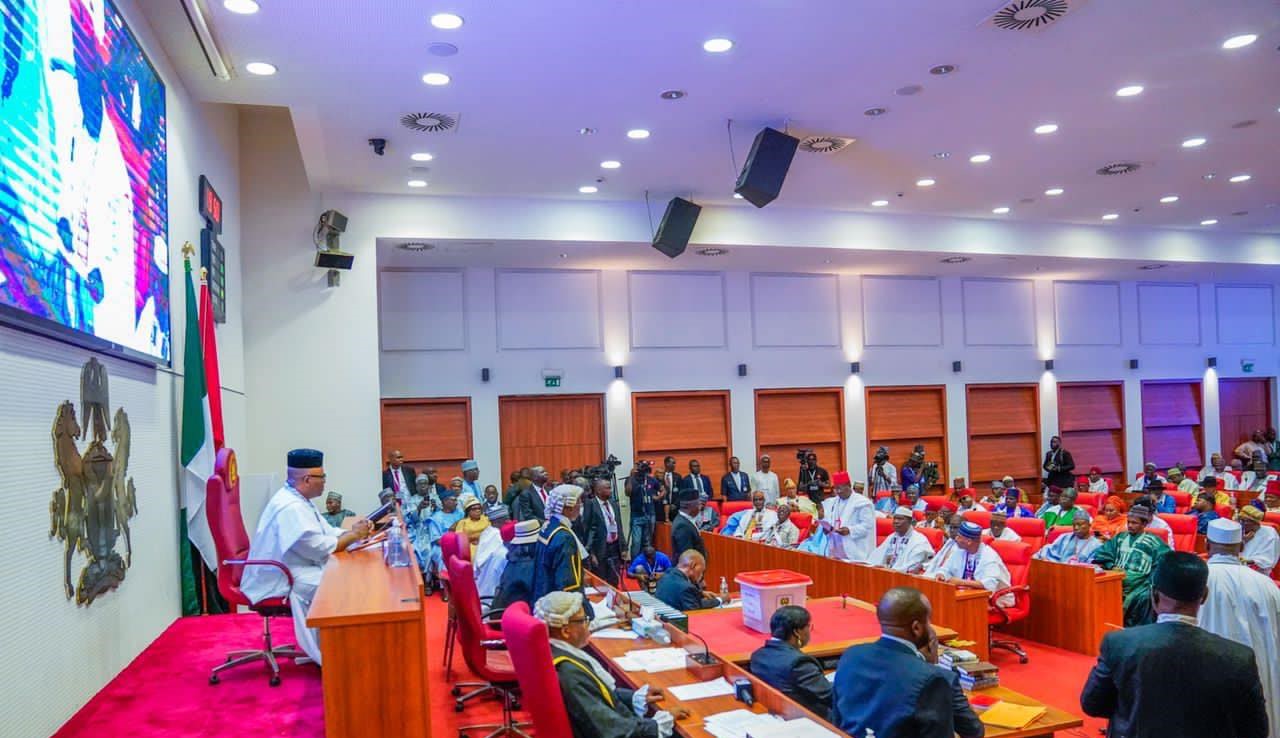
The request was presented in a letter read during plenary, where the President explained that the adjustment would improve fiscal transparency and ensure the proper execution of major government programmes. He also noted that the review would allow the inclusion of existing debt obligations and align the country’s financial plans with current economic realities.
The proposed increase is expected to be funded through gains from rising crude oil prices linked to global tensions, particularly the United States-Iran conflict, as well as fresh borrowing.
Despite the President’s request, lawmakers went further by approving a total budget of N68.3 trillion—higher than both the initial proposal of N58.18 trillion and the revised figure implied by the additional request. The increase, according to the National Assembly, is designed to address outstanding obligations, fund infrastructure projects, strengthen the judiciary, and support preparations for the 2027 general elections.
A significant portion of the adjustment includes the rollover of over N7 trillion in capital projects from the 2025 budget, many of which were affected by revenue shortfalls. Lawmakers said carrying these projects into 2026 would prevent abandonment and rising costs.
The revised budget also makes provision for key sectors such as rail development, healthcare, and the judiciary. Funds have been allocated for major rail projects across several states, improvements in healthcare infrastructure through international partnerships, and increased funding for courts to handle election-related cases.
To finance the expanded spending, the government plans to rely on a mix of increased revenue and borrowing. This includes higher oil price benchmarks, improved tax contributions from the telecommunications sector, and external loans.
In addition, the National Assembly approved fresh external borrowing totalling $6 billion. The loans are expected to support budget implementation, infrastructure development, and the repayment of existing debts. Part of the funding will also go into the rehabilitation of key ports in Lagos to improve efficiency in the maritime sector.
Read Also;
Wave of Defections Reshapes House of Representatives Ahead of 2027 Elections
Economic experts have weighed in on the development, stressing the need for careful utilisation of the additional funds. They highlighted security, power supply, infrastructure, and social welfare as critical areas that should be prioritised to drive growth and ease the burden on citizens.
While a larger budget could support development and job creation, analysts warn that its success will depend largely on transparency, effective implementation, and improved revenue generation.
The 2026 budget is expected to be sent to the President for assent in the coming days, marking a significant step in the government’s fiscal planning amid a challenging global economic environment.