
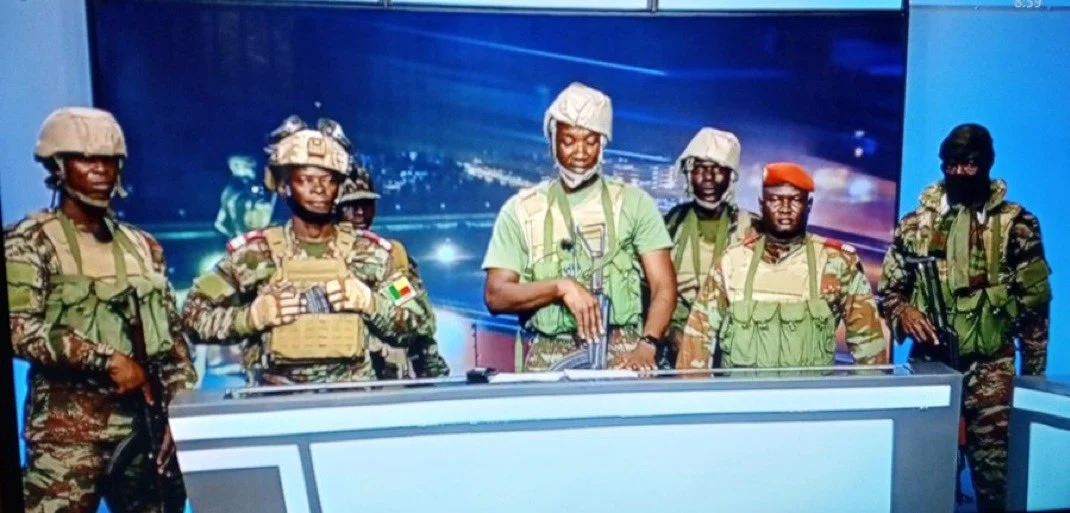
Calm has returned to Cotonou after Sunday’s failed coup attempt in the Benin Republic, prompting the United States Embassy to lift its earlier shelter-in-place advisory for American citizens.
In an updated statement on Monday, the embassy announced that normalcy had largely been restored.
“The US Embassy in Cotonou assesses that the situation in Cotonou is calm and has returned to normal. We are lifting the shelter-in-place recommendation,” it said, while still urging Americans to remain cautious, avoid crowds, and stay alert.
The advisory change followed a tense 24-hour period in which a group of soldiers calling themselves the “Military Committee for Refoundation” attempted to overthrow President Patrice Talon. The mutineers briefly appeared on state television, claiming they had dissolved the government and suspended the constitution, after an unsuccessful attack on the president’s residence.
The soldiers momentarily seized the national broadcaster in an effort to project legitimacy, causing widespread uncertainty. Borders were reportedly shut and political activities frozen as the situation unfolded.
Later on Sunday, Interior Minister Alassane Seidou confirmed that loyalist forces had taken back key locations in Cotonou. At least 14 soldiers involved were arrested, while others fled. Two senior officers—Chief of Army Staff Abou Issa and Army Chief Colonel Faizou Gomina—who had been held hostage earlier, were released on Monday after government action supported by Nigerian forces.
Reports from the city showed a gradual return to routine activities, with roads reopening and traffic flowing normally, although military tanks were still positioned in a few strategic areas. President Talon later appeared on national television, assuring citizens that the mutiny had been contained and that those responsible would be brought to justice.
The attempted coup comes amid a series of military takeovers in West Africa, including Niger, Mali, Burkina Faso, Guinea, and more recently Guinea-Bissau. Benin requested immediate assistance from Nigeria, which deployed troops and conducted military operations to help suppress the uprising. ECOWAS also announced the deployment of troops from Ghana, Ivory Coast, Nigeria, and Sierra Leone to safeguard constitutional order.
Read Also;
Benin Arrests Soldiers After Foiled Coup Attempt
Reactions from the international community were swift, with the UN, AU, France, and regional bodies condemning the coup attempt and reaffirming their support for democracy.
President Talon, who is serving his second and final term, is constitutionally barred from seeking a third. His preferred successor, Finance Minister Romuald Wadagni, is seen as the leading candidate for the April presidential election, though critics accuse Talon of tightening his grip on the political space.
Benin, which has experienced multiple coups since independence in 1960, saw an unusually rapid return to stability this time, with constitutional order quickly restored and calm returning to the capital.