
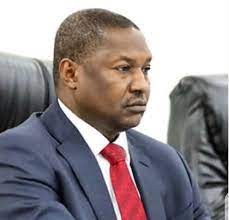
Operatives of the Economic and Financial Crimes Commission (EFCC) have carried out raids on the offices and private residences of former Attorney-General of the Federation and Minister of Justice, Abubakar Malami (SAN), in Abuja and Kebbi State.
The development was confirmed on Wednesday by Malami’s media aide, Mohammed Doka, who disclosed that the searches followed recent public comments made by Malami’s office concerning Chapter 9 of the Justice Ayo Salami Judicial Commission of Inquiry Report.
According to Doka, the EFCC action was allegedly aimed at seizing copies of Chapter 9 of the report. He accused the EFCC Chairman, Ola Olukoyede, of bias and called for his recusal from any matter relating to Malami. He described the timing and scale of the raids as disturbing, raising questions about the motive, legality and intent behind the operation.
The Justice Ayo Salami Judicial Commission of Inquiry was set up by the Federal Government in 2021 to probe allegations of corruption, abuse of office and mismanagement of recovered assets within the EFCC, particularly during the tenure of former EFCC Chairman, Ibrahim Magu. Although the panel submitted its report to the Presidency in November 2021, the document has largely remained unpublished.
Chapter 9 of the report has attracted controversy, as it is believed to contain findings and recommendations concerning the actions of senior government officials, including Malami, during his period as supervising minister of the EFCC.
Malami’s camp described the raids as “deeply alarming,” alleging that they amounted to intimidation and retaliation following his call for the EFCC chairman’s recusal. The statement claimed the safety of Malami and his staff had been compromised and urged Nigerians and the international community to take note of what it described as a worrying pattern of conduct.
Read Also;
EFCC Warns OPay to Strengthen Compliance and Prevent Fraud
The former AGF also challenged the EFCC to explain the legal basis for searches allegedly focused on a specific chapter of a judicial commission report, questioning why due process was not followed if the investigation was lawful.
Malami further called on civil society organisations, professional bodies and human rights groups to pressure the Federal Government to release the full Justice Ayo Salami Judicial Commission of Inquiry Report, particularly Chapter 9, arguing that public disclosure would enhance transparency and accountability.
He maintained that he is willing to submit himself to a fair and lawful process before a court of competent jurisdiction, stressing that raids and media trials cannot replace due process and the rule of law. As of the time of this report, the EFCC had not issued an official response to the allegations.