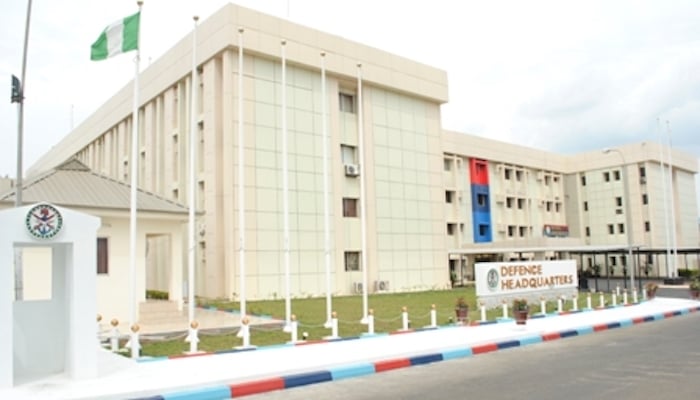
The Nigerian military says it is closely monitoring Boko Haram and Islamic State West Africa Province (ISWAP) fighters who are reportedly fleeing their hideouts following recent United States airstrikes in parts of northern Nigeria.
The strikes, announced by US President Donald Trump on Christmas Day, targeted Islamic State-linked militants in north-western Nigeria as part of counterterrorism cooperation with the Nigerian government. The Federal Government later confirmed the operation.
In the aftermath of the strikes, concerns have emerged about the movement of armed groups into neighbouring communities. Traditional and community leaders in parts of Benue and Sokoto states reported unusual movements of armed men, with some suspected fighters dispersing into smaller groups and heading toward forest corridors or border areas.
Despite these reports, senior military sources said the situation is under control and that the movements of fleeing fighters are being tracked.
“We are aware that they are fleeing, and we have intelligence on their movements. Surveillance and reconnaissance operations are ongoing to monitor and track them,” a senior military official said.
Another official added that the military’s intelligence, surveillance and reconnaissance capabilities were actively being deployed to prevent the regrouping of the terrorists.
Meanwhile, the airstrikes have reignited public debate over the possibility of deeper US military involvement in Nigeria, including the deployment of American troops.
Nigeria’s Minister of Foreign Affairs, Yusuf Tuggar, recently said the Ministry of Defence would advise the government on next steps when asked whether Nigeria might allow US soldiers into the country.
Retired Brigadier General Peter Aro strongly opposed the idea, warning that deploying foreign troops could have serious legal, diplomatic and social consequences.
“I do not support the deployment of US soldiers on Nigerian soil. Foreign troops can only be deployed under a formal defence pact approved at the highest level, and even then, the implications would be profound,” Aro said.
He cautioned that Nigeria’s already fragile national cohesion could be further strained and that the presence of foreign troops might fuel insurgent propaganda and deepen internal mistrust.
According to him, Nigeria already has sufficient ground forces and would benefit more from foreign support in areas such as air power, surveillance and precision strike capabilities, rather than foreign boots on the ground.
In contrast, another retired officer, Brigadier General Bashir Adewinbi, supported closer security collaboration with the US, describing international cooperation as normal and sometimes necessary.
“If deployment becomes necessary and follows proper diplomatic procedures with clear terms of engagement, I would support it,” Adewinbi said, adding that collaboration would not weaken the morale of Nigerian troops.
Other retired officers expressed caution. Group Captain Sadique Shehu criticised suggestions of relying on foreign soldiers, saying Nigeria should seek technology and intelligence support but not allow external forces to fight its battles.
“As a former military officer, it is disappointing that this is even being considered. We can accept assistance, but we should not depend on foreign soldiers to fight on our soil,” he said.
Shehu also noted that there was no confirmed information yet on casualties from the US strikes and stressed the importance of transparency from Nigerian authorities.
Read Also;
Hotel Owner Claims Staff Injured After Debris From US Airstrikes Hit Kwara Hotel
“When incidents like this happen, Nigerians should hear from their own government first, not foreign leaders,” he added.
Meanwhile, US Congressman Riley Moore defended the airstrikes, insisting they were aimed at restoring peace rather than escalating conflict. He said the operation was intended to protect civilians, particularly Christians facing violent attacks, and was carried out in coordination with the Nigerian government.
“President Trump is not bringing war to Nigeria; he is bringing security and hope to those under threat,” Moore said.
As military monitoring continues, discussions around the scope and limits of foreign involvement in Nigeria’s fight against terrorism remain active, highlighting the delicate balance between international cooperation and national sovereignty.