By Evans Ufeli Esq
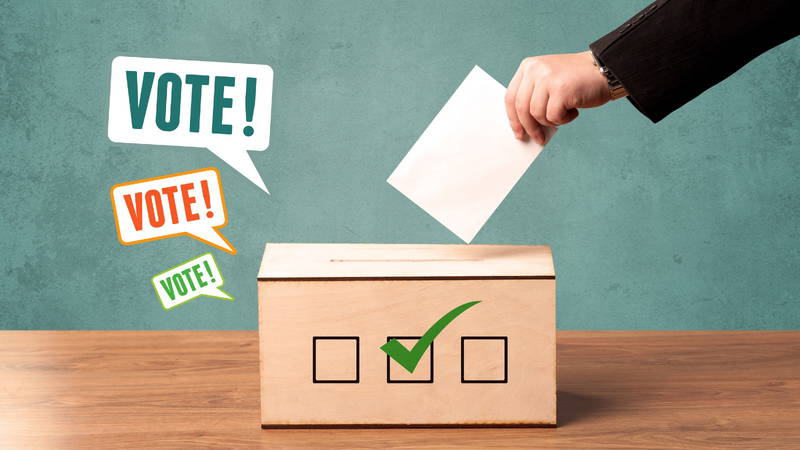
The Electoral Act 2026 (as amended) was meant to arrive like a long-awaited season: a statute clothed in fresh promise, its pages fragrant with the rhetoric of renewal, meant to prune the rot that had swollen the old order and to let clean light fall upon the creaking machinery of the republic. It was drafted in the language of reform, touted as a new covenant between citizens and the state, designed to cleanse the democratic ritual of its worst excesses. Yet when the law was called to its first true reckoning on that febrile Saturday; the 21st of February 2026 in Abuja, during the local council elections, the scene that unfolded was less a coronation of civic progress than an elegy for hopes prematurely blossomed.
Dawn broke over polling units with the same indifferent splendor that visits every contest, laying bare the ordinary grit of a nation still learning to trust its institutions. People queued beneath makeshift shelters and beneath the merciless sun, each occupying a small human story in the grand ledger of the nation. For many, the Electoral Act 2026 had been an assurance: that bureaucratic loopholes would be closed, that procedures would be tightened, and that technological innovations would seal leaks where fraud once flowed. In practice, however, the promise encountered a web of human improvisations and age-old habits that law alone struggles to dislodge.
The day was marred by a spectacle at once sordid and familiar. Vote buying; that corrosive commerce in civic dignity; spread like a banquet of small betrayals. Bills changed hands in pockets, in the shade of trees, and in the backrooms of polling centres; each exchanged a mercenary calculus weighing naira against conscience. Where the Act had intended to make the ballot an untouchable instrument, the street proved ingenious in restoring the old economy: voters, many of them precarious and poor, were asked to convert their civic capital into immediate survival. It was not merely bribery; it was a statement about inequality and desperation, and about how law, when divorced from deeper social remedies, becomes paper armor against economic exigency.
Regular malpractices; not subtle and not isolated; punctuated the day like a predictable drumbeat. Accredited procedures were skipped or superficially performed; observers were shunted aside or kept at arm’s length; ballot materials were mishandled with a negligence that suggested either complicity or professional decay. The rituals of democratic legitimacy were staged, but the stagehands were often absent or hired by invisible interests. Where oversight should have been vigilant and visible, it was too often perfunctory. The amended Act provided instruments for accountability; the instruments themselves were not always wielded.
Technology, long vaunted as the talisman of modern elections, made its cameo in the form of the Irev. Here was a tool designed to render results more transparent: an electronic avenue to report and corroborate tallies, to place data where it could be independently viewed and verified. Yet the mere presence of Irev could not, in itself, sanctify the process. Systems can be brilliant lights or elaborate façades. On that Saturday the portal was activated, but activation is not an assurance. If the hardware and software bring speed, they cannot cure the human choices that misapply them. Connectivity faltered in spots; data entry was subject to human error and manipulation; and where institutional will to enforce accuracy wavered, the Irev became another instrument subject to the same foibles that have beset the electoral system for decades.
Thus the Act’s first test illuminated a stubborn truth: legal reform is necessary but not sufficient. Laws can redraw institutional boundaries, strengthen penalties, and prescribe better practices; they can even require the use of technological tools like Irev; but they cannot alone transform political cultures that prize patronage over principle or economic circumstances that make selling a vote sound like rational arithmetic. The election day was a mosaic of small failures: a neglected clause here, a lax official there, a voter who chose cash over conviction. These fragments assembled into a broader image of an exercise of democracy that had been tamed, not by law, but by the persistence of old incentives.
There is, nevertheless, room for cautious hope. Every imperfect enactment invites scrutiny that can be turned into improvement. The shortcomings exposed by that febrile Saturday can be catalogued and corrected: better training for officials, more robust protections for observers, stricter enforcement against vote buying, and technological safeguards that go beyond mere reporting to include integrity checks and resilient infrastructure. Importantly, reforms must move beyond the legal code to address the economic and civic education deficits that make vote buying effective. The Irev, properly supported and transparently managed, can still serve as a beacon; but it must be embedded within a broader ecosystem of accountability that includes empowered civil society, impartial enforcement, and material improvements for the electorate.
Read Also;
THE WIRETAP QUESTION: BETWEEN SPEECH AND CRIME
In the end, the amended Electoral Act 2026 did not fail in isolation. It confronted a living, complicated polity that will not bend to statute alone. Saturday’s tainted test was less the final word than a summons: to legislators, to administrators, to voters themselves. The nation must learn to treat law not as a talisman to be waved at one unlucky dawn, but as the beginning of a patient, multi-faceted work. Only then will statutes cease to be mere promises and begin to shape the democratic habits they were made to nurture.