The Federal Government has announced plans to expand Nigeria’s solid minerals industry 25 times to about N30tn (approximately $21bn) by 2030, as ongoing reforms continue to attract investments and boost revenue from the sector.
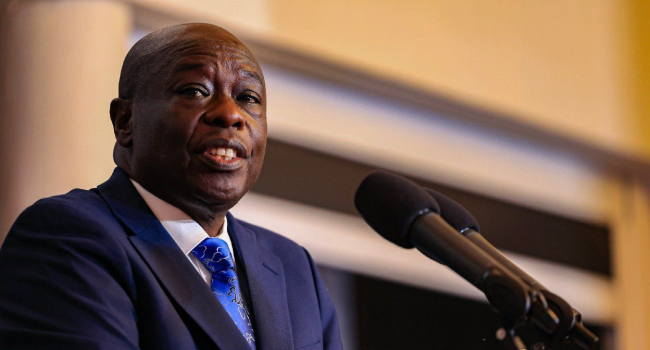
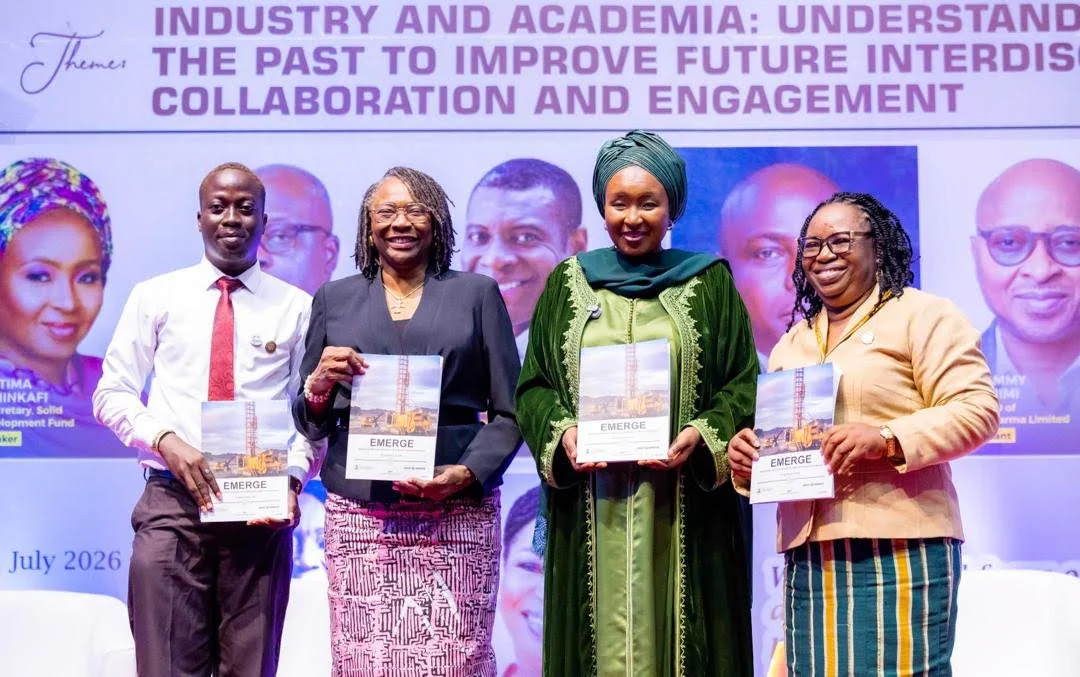
The Executive Secretary and Chief Executive Officer of the Solid Minerals Development Fund (SMDF), Fatima Shinkafi, disclosed this during the maiden Faculty of Physical and Earth Sciences Annual Lecture Series at the University of Lagos.
Speaking on the theme, “Building Nigeria’s Solid Minerals Future: The Power of Academia, Government and Industry in Partnership,” Shinkafi said the government’s target was to transform the mining sector into a major contributor to economic growth.
She explained that reforms introduced in the sector had already increased federation revenue from solid minerals by more than 337 per cent within two years and attracted about $2.6bn in new investment commitments.
According to her, Nigeria has more than 44 commercially viable minerals, including gold, lithium, iron ore, coal, bitumen, barite and gemstones spread across over 500 locations, but the sector has remained largely underdeveloped.
She noted that solid minerals currently contribute less than one per cent to Nigeria’s GDP, despite the country’s huge mineral wealth.
Shinkafi said the Federal Government’s Seven-Point Agenda for the sector, introduced by the Minister of Solid Minerals Development, Dele Alake, was designed to rebuild the industry through stronger regulation, improved geological data, investment promotion and local processing of minerals.
The reforms include the establishment of the Nigerian Solid Minerals Corporation, attracting private capital, strengthening exploration data through the Nigeria Minerals Decision Support System, formalising artisanal mining, fighting illegal mining, revoking inactive licences and encouraging value addition.
Highlighting the impact of the reforms, she said revenue generated from the sector increased from N16bn in 2023 to N38bn in 2024 and surpassed N70bn in 2025.
She added that the mining sector recorded a 33.5 per cent real growth in 2025, far above the overall economic growth rate of 3.9 per cent.
Shinkafi also revealed that one of the biggest investments attracted by the reforms was a $1.3bn alumina refinery project, described as the largest mining investment recorded in Nigeria’s history.
She said the project, alongside other investments, would significantly improve Nigeria’s industrial capacity, exports and employment opportunities.
The SMDF boss also introduced the Early-Stage Mineral Exploration and Research Grant Endowment (EMERGE), a funding initiative aimed at supporting university research in mineral exploration and critical minerals development.
She explained that the programme would provide grants for geoscience research and help bridge the gap between academic discoveries and commercial mining opportunities.
Encouraging more women to pursue careers in mining and geology, Shinkafi said the industry needed innovation and knowledge rather than gender limitations.
The Vice-Chancellor of the University of Lagos, Prof. Folasade Ogunsola, described collaboration between universities and industry stakeholders as essential to unlocking Nigeria’s mineral potential.
She said research institutions must play a bigger role in turning scientific discoveries into economic opportunities.
The Federal Government has identified the solid minerals sector as a key area for diversifying Nigeria’s economy away from dependence on crude oil.
Despite possessing large deposits of valuable minerals, the sector has historically struggled due to illegal mining, weak infrastructure, limited processing capacity and inadequate investment. The government says the ongoing reforms are aimed at changing that situation and making mining a major driver of national development.