The National Assembly has introduced sweeping reforms in the newly enacted Electoral Act, 2026, including a two-year jail term for any Resident Electoral Commissioner (REC) who withholds vital electoral documents and the creation of a special fund to guarantee the financial autonomy of the Independent National Electoral Commission (INEC) ahead of the 2027 general election.
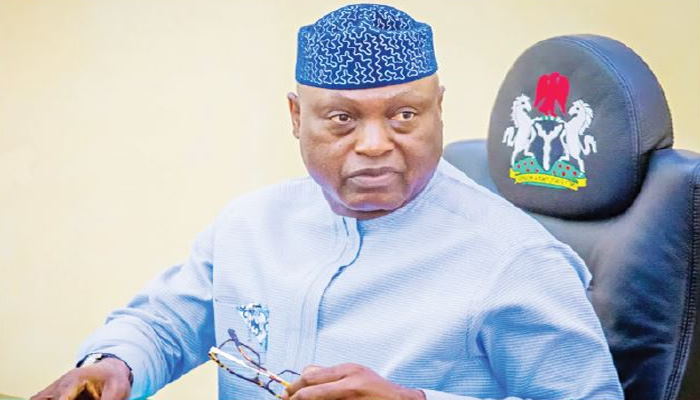
The reforms were outlined on Sunday by Senate Leader, Opeyemi Bamidele, who described the law as a product of two years of consultations and legislative engagement aimed at strengthening Nigeria’s electoral system.
His remarks come amid criticism from opposition parties, which argue that certain provisions in the new Act — particularly those relating to party primaries, campaign spending and election timelines — favour the ruling All Progressives Congress. While the Presidency and the APC have defended the amendments as necessary to deepen democracy and enhance transparency, critics insist the changes could tilt the political playing field.
Bamidele, however, maintained that the law contains several overlooked benefits. According to him, the new framework mandates the use of the Bimodal Voters Accreditation System (BVAS), makes electronic transmission of results compulsory, strengthens penalties for electoral offences and reinforces INEC’s independence.
One of the most significant provisions is the establishment of a dedicated fund for INEC under Section 3 of the Act. The fund is designed to ensure financial autonomy, operational stability and continuity in election planning. It also mandates that election funds be released at least six months before a general election, a move lawmakers say will prevent last-minute funding bottlenecks.
Under Section 60(3), electronic transmission of results to the INEC Result Viewing Portal is now mandatory. Any presiding officer who deliberately frustrates the process faces up to six months’ imprisonment, a N500,000 fine, or both. However, the law provides that where technical challenges occur, a fallback to manual documentation using Form EC8A is permitted in line with INEC guidelines.
In a major shift aimed at curbing impunity, Section 74(1) requires a REC to release certified true copies of requested electoral documents within 24 hours of payment. Failure to comply attracts a minimum of two years’ imprisonment without the option of a fine.
The Act also strengthens penalties for vote-buying, impersonation and result manipulation, prescribing up to two years in jail or fines ranging from N500,000 to N2 million upon conviction.
On party politics, the law abolishes indirect primaries, retaining only direct and consensus primaries in a bid to curb the monetisation of delegates. Political parties are now required to maintain digital membership registers and submit them to INEC at least 21 days before any primaries or conventions. Any party that fails to comply will be barred from fielding candidates in the affected election.
Campaign spending limits have also been significantly reviewed upward. The presidential cap has been increased from N5 billion to N10 billion, governorship from N1 billion to N3 billion, Senate from N500 million to N1 billion, and House of Representatives from N70 million to N250 million, among others.
Additional provisions address inclusivity, including gender-sensitive queue arrangements in areas where cultural norms require separation and support mechanisms for persons with visual impairments. Political parties that fail to submit accurate audited financial returns now face fines of up to N10 million.
Read Also;
Oil Sector Uncertainty, FCT Poll Dispute and Bayelsa Intrigues Dominate Headlines
Defending the swift presidential assent, Bamidele said the legislative process was inclusive, involving stakeholders such as INEC, civil society organisations and development partners. He argued that the reforms reflect collective input and are designed to strengthen institutional independence, improve transparency and reduce electoral disputes.
“The Electoral Act, 2026, represents a consolidation and refinement of our electoral governance framework,” he said. “It enhances financial and operational independence, deepens transparency and reinforces accountability in Nigeria’s democratic process.”
As preparations for 2027 gather pace, the new law is expected to shape the conduct of elections and test the balance between electoral reform and political competition in Africa’s largest democracy.