
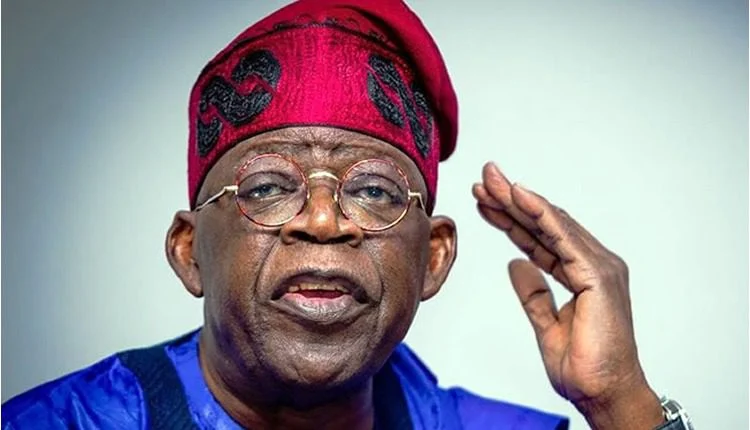
The Presidency has thrown its weight behind President Bola Tinubu’s Executive Order halting revenue deductions by the Nigerian National Petroleum Company Limited and other agencies, insisting the directive is rooted firmly in the 1999 Constitution.
Presidential spokesman Bayo Onanuga argued that the Petroleum Industry Act (PIA) cannot override the Constitution, stressing that the President’s action is aimed at restoring revenues constitutionally due to the Federal, State and Local Governments. According to him, provisions of the PIA allowed structural deductions that weakened the Federation Account, a situation the Executive Order seeks to correct.
The directive, however, has ignited a fierce legal and political debate.
The Petroleum and Natural Gas Senior Staff Association of Nigeria (PENGASSAN) faulted the move, warning it could undermine NNPCL’s operational capacity, including its statutory funding obligations such as contributions to the Frontier Exploration Fund.
Several Senior Advocates of Nigeria (SANs) have also questioned the legality of the order. Legal luminaries including Lekan Ojo, Adeola Adedipe, Paul Obi, Wahab Shittu and others insist that an Executive Order cannot amend, suspend or nullify an Act of the National Assembly. They argue that under the doctrine of separation of powers, only the legislature can amend a law, while the judiciary alone can declare any provision unconstitutional.
The President of the Nigerian Bar Association, Afam Osigwe (SAN), maintained that executive instruments are meant to guide administration, not override legislation. According to him, any executive directive that contradicts an existing statute risks being struck down by the courts.
On the other hand, senior lawyer Mofesomo Tayo-Oyetibo (SAN) offered a different perspective, describing the order as an assertion of constitutional supremacy rather than an attempt to repeal the PIA. He argued that Section 1 of the Constitution makes it the supreme law and that the President, under Section 5, is bound by oath to protect and defend it. In his view, aligning executive conduct with constitutional provisions does not amount to legislating by fiat.
The Presidency has also defended the move through media aide Sunday Dare, who cited Section 80(1) of the Constitution requiring all Federation revenues to be paid into the Consolidated Revenue Fund. He maintained that Executive Order 9 merely operationalises constitutional provisions and does not create new law.
Beyond the legal tussle, business leaders have downplayed fears that the directive could scare off investors. The Nigeria Employers’ Consultative Association and the Lagos Chamber of Commerce and Industry both described the order as a step toward greater transparency and accountability in revenue management.
Read Also;
Oil Agencies Rattled as Tinubu’s Revenue Order Sparks Funding, Legal Debate
They argued that foreign investors prioritise predictability and transparency, suggesting that clearer revenue remittance structures could, in fact, strengthen investor confidence rather than weaken it.
At the heart of the controversy lies a constitutional question: Can the President direct revenue remittances in a way that appears to conflict with an existing Act of Parliament? While the Presidency insists it is defending constitutional supremacy, critics maintain that the proper avenue for resolving such disputes remains the courts.
As protests and legal opinions continue to mount, the matter appears destined for judicial interpretation — a test that could further define the limits of executive authority in Nigeria’s constitutional democracy.