The House of Representatives has described the Economic and Financial Crimes Commission (EFCC) and the Nigerian Financial Intelligence Unit (NFIU) as key institutions driving Nigeria’s economic recovery and strengthening the country’s financial system.
Lawmakers made this known while highlighting the EFCC’s continued recovery of stolen public assets and Nigeria’s recent removal from the Financial Action Task Force (FATF) grey list — a move widely seen as a major boost to the nation’s global financial reputation.
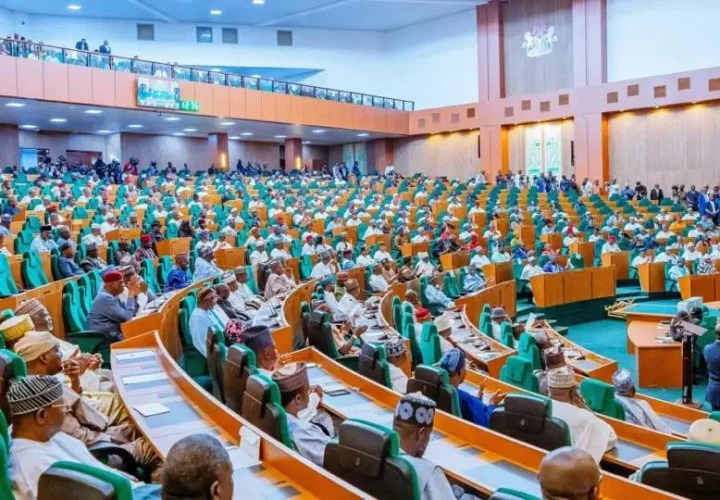
Speaking on Monday during the 2025 budget performance review and 2026 budget defence of both agencies at the National Assembly Complex in Abuja, the Chairman of the House Committee on Financial Crimes, Ginger Onwusibe, praised the EFCC and NFIU for what he called their sustained impact.
He said the collaboration between both agencies has improved Nigeria’s fight against money laundering and terrorism financing, while also restoring international confidence in the country’s financial structure.
“Permit me to commend the EFCC and NFIU for their tireless efforts, particularly Nigeria’s recent delisting from the FATF grey list,” Onwusibe said.
“This achievement underscores the government’s commitment to combating financial crimes and strengthening our AML/CFT framework.”
Onwusibe noted that the delisting could improve Nigeria’s access to international credit, attract foreign investment, and strengthen the nation’s financial security system.
He also revealed that as of October 2025, the EFCC had recovered more than ₦566 billion, $411 million, and 1,502 properties, while securing 3,175 convictions nationwide. He added that the NFIU played a major role by providing intelligence that supported investigations and prosecutions.
“These achievements clearly demonstrate the agencies’ capabilities and dedication,” he said, attributing the results to the leadership of EFCC Chairman Ola Olukoyede and NFIU Director Hafsat Bakari.
The lawmaker explained that the EFCC has intensified asset recovery efforts in recent years through specialised units, stronger international collaboration, and improved use of financial intelligence.
He also noted that the NFIU, which became fully independent in 2018 after Nigeria’s suspension from the Egmont Group, has grown into a major intelligence hub for tracking illicit financial flows both locally and internationally.
Onwusibe linked Nigeria’s FATF grey list exit to reforms such as intelligence-driven investigations, improved compliance, and better coordination among agencies like the EFCC, NFIU, and the Central Bank of Nigeria.
While praising their achievements, he urged both agencies to remain professional, transparent, and accountable, especially as Nigerians demand stronger and more visible anti-corruption results.
On Nigeria’s broader economic outlook, he said the 2026 budget is focused on infrastructure and food security, with goals such as job creation, improved business environment, macroeconomic stability, and human capital development.
However, he warned that success would depend on proper implementation, increased oil production, and stronger non-oil revenue generation.
He acknowledged that many Nigerians are still facing hardship, but said the economy is beginning to show signs of recovery. He cited projections from the International Monetary Fund (IMF), which forecast a 4.4 per cent economic growth rate for Nigeria in 2026.
The committee chairman also stated that financial crimes remain a major threat to Nigeria’s economy, making the roles of the EFCC and NFIU even more important in safeguarding national stability.
He assured Nigerians that the 10th House of Representatives is committed to strengthening laws against financial crimes, adding that four major bills have already been considered to promote transparency and align Nigeria with global best practices.
These include amendments to the Money Laundering Act 2022, the EFCC Act 2004, and the Proceeds of Crime Act.
Read Also;
Osun Monarch Says Four Suspects Arrested Over Ido-Ayegunle Killings
“These bills are designed to modernise our laws, bridge operational gaps, enhance enforcement mechanisms, and ensure that crime does not pay,” he said.
Onwusibe concluded by promising that the House committee would thoroughly examine the 2026 budget proposals of both agencies to ensure accountability and effective use of public funds.
He added that priority areas include stronger investigations and prosecutions, better asset recovery management, improved international cooperation, and addressing new threats such as cybercrime and virtual assets.
“The work of the EFCC and NFIU is critical to Nigeria’s economic stability and security,” he said.