
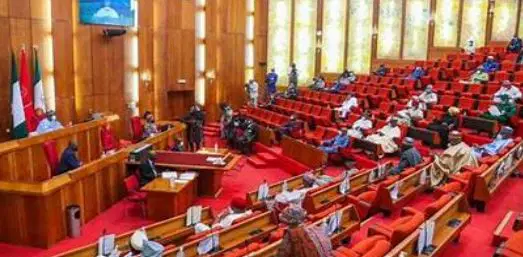
Senate Leader, Opeyemi Bamidele, has revealed plans to sponsor a bill that would introduce a single six-year tenure for presidents and governors in Nigeria after the 2027 general elections.
Bamidele said the proposed legislation would be one of the first bills he intends to present when the next Senate is inaugurated, arguing that it would allow elected leaders to focus fully on governance without the pressure of seeking re-election.
Speaking with journalists in his office on Tuesday, the lawmaker said the current two-term system often forces officeholders to spend a large part of their first term planning political strategies and campaigns for a second term.
According to him, a single six-year tenure would eliminate such distractions and encourage leaders to concentrate on delivering results from the moment they assume office.
Read Also:
Peter Obi Faults Tinubu’s Approval of Forest Guards for Oyo, Calls for Broader Security Strategy
“One of the first bills I hope to sponsor when the next Senate is inaugurated, by the grace of God, is a proposal that will allow presidents and governors to serve only one term of six years,” he said.
Bamidele explained that the arrangement would remove the need for political office holders to focus on re-election barely a few years after taking office.
“If you know you have only one six-year term, you can dedicate yourself fully to governance from day one. You know that is the only opportunity you have to make an impact,” he added.
The Senate Leader acknowledged that the proposal may generate debate and may not receive unanimous support, but insisted that lawmakers have a duty to promote reforms they believe will strengthen the country’s political system.
He stressed that the fact that a law currently exists does not mean it cannot be changed.
“That is my personal opinion. Not everyone will agree with me, but that should not stop me from proposing it. The role of parliament is to review and improve laws when necessary,” he said.
Bamidele noted that laws are meant to evolve with changing realities and national needs, adding that legislative reforms remain essential for the growth of democracy.
If introduced and approved by the National Assembly, the proposal would require an amendment to the Nigerian Constitution before it can become law.