
President Bola Tinubu’s administration has secured $11.4 billion in World Bank loan approvals within three years, putting it on track to exceed the total obtained during former President Muhammadu Buhari’s eight years in office.
An analysis of World Bank data shows that Nigeria received $11.4 billion in approved financing between June 2023 and June 2026. By comparison, Buhari’s administration secured $14.59 billion between 2015 and 2023. This means the current government has already reached more than 78 per cent of the previous administration’s total and would need about $3.19 billion in additional approvals to surpass it.
The approvals under Tinubu have already exceeded the amount approved during Buhari’s first four years in office, which stood at about $5.56 billion.
Despite the large approvals, only about $2.32 billion has been released so far, leaving $8.41 billion yet to be disbursed. This represents a disbursement rate of roughly 20 per cent, compared to about 82 per cent for projects approved during Buhari’s administration.
Most of the loans approved under Tinubu are targeted at economic reforms, agriculture, healthcare, education, power, digital infrastructure, financial inclusion and social protection.
One of the biggest approvals came in June 2024, when the World Bank approved a $2.25 billion package to support Nigeria’s economic reform programme, improve government revenue generation and strengthen macroeconomic stability. The funding also aims to cushion the impact of ongoing reforms on vulnerable Nigerians.
Another major approval followed in June 2026, when the World Bank approved $1.25 billion under the Nigeria Actions for Investment and Jobs Acceleration programme, designed to support private sector growth, job creation, agriculture, energy and digital infrastructure.
The agriculture sector has also received significant funding, including $500 million approved in March 2026 for the Nigeria Sustainable Agricultural Value-Chains for Growth project, while another $500 million was approved for the Rural Access and Agricultural Marketing Project.
In the power sector, the administration secured $750 million shortly after taking office for the Power Sector Recovery Programme and another $750 million for expanding renewable energy access across the country. Additional financing of $500 million was approved for improving power generation and irrigation infrastructure.
Education and healthcare have equally benefited. The World Bank approved $700 million for the Adolescent Girls Initiative for Learning and Empowerment, alongside several $500 million projects aimed at improving primary healthcare, education quality and governance.
Other approvals include $500 million for digital infrastructure, $500 million to support vulnerable communities, $500 million for quality basic education, $500 million for financial inclusion targeting small businesses, and $250 million for strengthening health security.
Economic analysts say the loans themselves are not necessarily a concern if they are used for productive projects that can stimulate economic growth and improve government revenue.
Development economist Dr. Aliyu Ilias, however, questioned the rising debt profile, arguing that increasing borrowing places more pressure on government finances through debt servicing, which could reduce spending on development projects.
On his part, the Chief Executive Officer of the Centre for the Promotion of Private Enterprise, Dr. Muda Yusuf, said the major concern should be whether Nigeria has the capacity to repay the loans rather than the volume of borrowing.
The World Bank explained that approved funds are released in phases based on project milestones and agreed conditions, rather than being paid out at once.
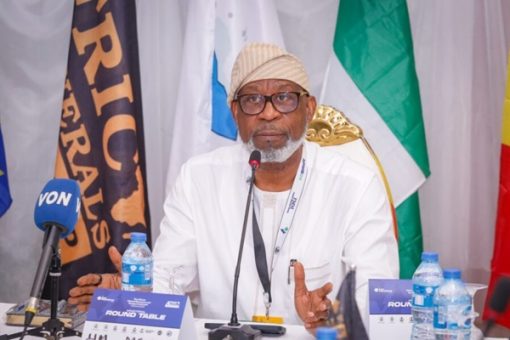
Meanwhile, Finance Minister Taiwo Oyedele defended the government’s borrowing strategy, insisting that the focus should be on how the loans are used.
According to him, borrowing to finance projects capable of generating economic returns and supporting long-term growth is a rational decision, provided the projects deliver value that exceeds the cost of the debt.