Barely four months after unveiling its timetable for the 2027 general elections, the Independent National Electoral Commission (INEC) is facing multiple legal battles that could affect the country’s next electoral process.
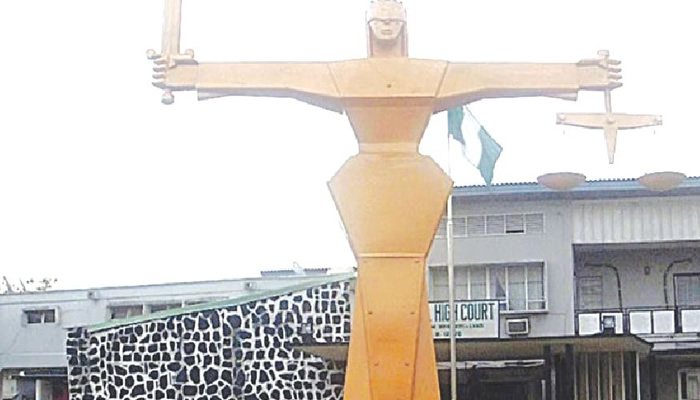
The disputes, currently before the Federal High Court and the Court of Appeal, are challenging issues ranging from INEC’s powers to set election timelines, the legality of some political parties, and the continued participation of certain parties in the 2027 polls.
Under the timetable released on February 26, 2026, political parties were expected to submit their membership registers between March 24 and April 25, conduct their primaries by May 31, and submit presidential and National Assembly candidates through INEC’s nomination portal between June 27 and July 11.
Governorship and state assembly nominations are scheduled for July 18 to August 8, while presidential and National Assembly campaigns are expected to begin on August 19.
The presidential and National Assembly elections are fixed for January 16, 2027, while governorship and state assembly elections will hold on February 6, 2027.
However, with key stages of the process already underway, at least six major court cases involving INEC could influence how the election preparations proceed.
Youth Party challenges INEC timetable
One of the most important cases is the suit filed by the Youth Party against INEC at the Federal High Court in Abuja.
The party challenged parts of INEC’s revised timetable, arguing that some deadlines set by the commission conflicted with timelines provided under the Electoral Act.
The case focused on issues including submission of party membership registers, conduct of primaries, nomination of candidates, withdrawal and substitution of candidates, and publication of candidates’ details.
The Federal High Court ruled that while INEC has constitutional powers to organise elections, the commission cannot override timelines specifically provided by law.
The court consequently nullified sections of the timetable that it found inconsistent with the Electoral Act.
INEC has appealed the judgment, arguing that the timetable is a carefully structured process where each stage depends on another and that altering specific deadlines could disrupt preparations for the 2027 elections.
The Court of Appeal has heard arguments from both sides and is expected to deliver judgment.
SDP also challenges election deadlines
The Social Democratic Party (SDP) also filed a suit against INEC, challenging aspects of the election timetable, especially deadlines relating to nomination and substitution of candidates.
Although the Federal High Court recognised INEC’s authority to issue election timetables, it ruled that the commission must operate within the limits of the Electoral Act.
The affected sections were struck down, prompting INEC to appeal the decision.
The Court of Appeal has also reserved judgment in the matter.
Political parties face deregistration battle
Another major legal issue involves a suit seeking the deregistration of five political parties — the African Democratic Congress (ADC), Accord, Action Alliance, Action People’s Party and Zenith Labour Party.
The case was filed by the Incorporated Trustees of the National Forum of Former Legislators, which argued that the parties should no longer participate in Nigeria’s electoral process.
The Federal High Court ordered INEC to deregister the parties, but the decision was suspended after the affected parties appealed.
The Court of Appeal granted a stay of execution, allowing the parties to remain active pending the outcome of the appeals.
The final decision will determine whether the parties can contest in the 2027 elections.
NDC registration under legal challenge
Another pending case before the Federal High Court involves a challenge to the registration and recognition of the Nigeria Democratic Congress (NDC).
The plaintiff, Ahidjo Ibrahim Karlahi, is questioning whether INEC followed constitutional and legal requirements in registering the party.
The outcome of the case could affect the party’s participation in the 2027 elections.
Legal experts warn of possible uncertainty
Legal and political analysts have expressed concerns that unresolved court cases could create uncertainty ahead of the elections.
Senior lawyer Mike Ahamba said the Court of Appeal would consider the importance of the electoral timeline before delivering judgment, adding that it would be wrong to predict the outcome of the cases.
Another Senior Advocate of Nigeria, Bankole Akomolafe, however, believes the cases may not disrupt INEC’s preparations because the commission has taken steps to protect the process.
He explained that INEC could continue listing parties and candidates while awaiting final court decisions, removing affected names if necessary after judgments are delivered.
INEC insists preparations will continue
INEC National Commissioner, Mohammed Kudu Haruna, assured Nigerians that the commission would continue with its timetable despite the ongoing litigation.
Haruna said political parties had completed their primaries and were now required to submit their candidates before the July 11 deadline.
He added that INEC would study any court judgment before deciding on the appropriate action.
“We are proceeding according to our timetable. But when the courts make their judgments, the commission will sit, study them and decide the best way forward,” he said.
Experts call for quick resolution
Political scientists warned that prolonged legal battles could affect public confidence in the electoral process if they are not resolved before the elections.
Professor Gbade Ojo of the University of Ilorin described the situation as a genuine concern, saying unresolved disputes could make preparations for 2027 elections unstable.
He argued that the judiciary must deliver timely judgments to prevent the cases from affecting democracy.
Similarly, Professor Oluwafemi Obayori of Lagos State University said all major electoral cases should be concluded before the elections to ensure a credible process.
According to him, disputes over election rules, party registration and INEC’s powers must be settled early enough to avoid confusion.
With campaigns expected to begin in August and the election dates already fixed, decisions from the courts are now being closely watched as they could determine the legal framework for Nigeria’s 2027 general elections.