Israel launched a fresh wave of strikes on Iran on Monday, escalating a conflict that is rapidly pushing the world into one of its worst energy crises in decades.
Explosions were reported in Tehran, while countries like Saudi Arabia and the United Arab Emirates moved to intercept incoming missiles and drones as tensions spread across the region. Iran has responded to the attacks with retaliatory strikes targeting Israel and key locations across the Gulf, including energy facilities and US diplomatic sites.
The impact on global energy supply has been severe. According to International Energy Agency chief Fatih Birol, at least 40 oil and gas facilities across the region have been badly damaged, with an estimated 11 million barrels of oil per day lost—surpassing disruptions seen during the oil crises of the 1970s. Oil prices have surged above $100 per barrel, raising fears of prolonged global economic instability.
A major flashpoint in the crisis is the Strait of Hormuz, a critical route for global oil shipments. Iran has restricted traffic through the waterway and is considering new tolls, warning that access may not return to normal. In response, US President Donald Trump issued a 48-hour ultimatum, threatening to target Iranian power infrastructure if the strait is not reopened.
Iran, however, has pushed back strongly. Parliament Speaker Mohammad Bagher Ghalibaf warned that any such action would trigger attacks on vital infrastructure across the Middle East, raising the risk of a wider regional conflict.
Read Also;
NAF Vows Sustained Air Strikes Against Terrorists Nationwide
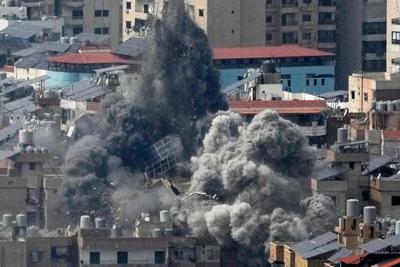
Meanwhile, Israeli Prime Minister Benjamin Netanyahu has signalled that the war could be prolonged, with operations extending beyond Iran to include Iran-backed Hezbollah in Lebanon. Israeli forces have intensified strikes in Lebanon, where over 1,000 people have reportedly died and more than a million displaced.
Despite Israel’s strong air defence systems, Iranian missiles have managed to penetrate and strike areas in southern Israel, including near the sensitive Dimona region, injuring dozens. Israel has vowed to continue targeting Iranian military leadership, while Iran insists its actions are retaliatory.
As the war enters its fourth week, uncertainty remains over how it will end, with rising casualties, deepening economic fallout, and growing fears that the conflict could spiral into a broader global crisis.