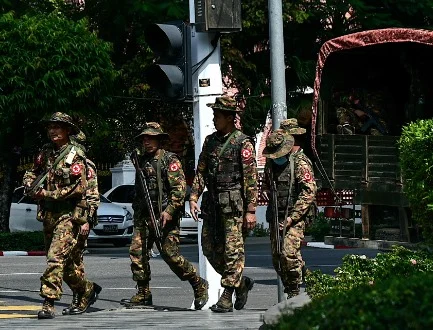
Myanmar’s ruling military has granted amnesty to more than 7,000 prisoners convicted of financing or supporting groups it designates as “terrorist” organisations.
In a statement released on Monday, the junta led by Min Aung Hlaing announced the release of over 7,300 inmates jailed under laws prohibiting the funding, sheltering or assisting of banned groups. The military government has used the terrorism label broadly against pro-democracy activists and armed groups opposing its rule.
Since seizing power in a 2021 coup, Myanmar’s military has imprisoned thousands of civilians, ending a decade-long democratic experiment and detaining elected leader Aung San Suu Kyi. Pro-democracy movements aligned with her, as well as ethnic armed organisations fighting the military, have been outlawed, with harsh penalties including life imprisonment and possible death sentences for those accused of supporting them.
Authorities did not specify which groups the freed prisoners were accused of backing.
Outside Insein Prison — the country’s most notorious detention facility — dozens of families gathered early Monday, hoping to reunite with loved ones. Around 300 prisoners were seen leaving the prison in buses, greeted by emotional relatives holding flowers and signs bearing names.
The junta said the releases were made in honour of a public holiday and were intended to promote “peace of mind” among the public on humanitarian grounds.
In a separate announcement, authorities said nearly 12,500 people currently facing trial on similar terrorism-related charges would have their cases dropped. Additional pardons included more than 2,800 other inmates and 10 foreign nationals, though officials provided no further details about their convictions.
Read Also;
Four Die in Stampede During Ramadan Alms Distribution in Katsina
The mass amnesty comes as the military seeks to project an image of transition following elections concluded in January. The junta has described the vote as part of a plan to hand power to a civilian administration. However, critics argue the process lacks credibility, noting that Suu Kyi remains imprisoned, her party has been dissolved, and the main pro-military party secured victory without meaningful competition.
Large parts of the country, particularly areas controlled by rebel groups, did not participate in the elections. While a new parliament is expected to convene in the coming weeks and a president to be elected in April, uncertainty remains over the military’s long-term intentions — and whether genuine civilian rule will be restored.