The Nigeria Centre for Disease Control and Prevention has placed Lagos, the Federal Capital Territory and several other states on high Ebola alert following the outbreak of the deadly Bundibugyo strain of Ebola Virus Disease in parts of East and Central Africa.
In a nationwide public health advisory issued to commissioners for health, the agency warned that Nigeria faces a significant risk of importing the virus due to increasing international travel, porous borders, and rising regional transmission across affected African countries.
States classified as high-risk by the NCDC include Lagos, the Federal Capital Territory, Rivers, Kano, Enugu, Borno, Akwa Ibom, Cross River, Taraba and Adamawa because of their airports, seaports, border routes and high population movement.
The agency explained that although Nigeria has not recorded any confirmed Ebola case, a recent risk assessment conducted after the outbreak was declared a public health emergency of international concern showed that the country remains highly vulnerable.
According to the NCDC, Uganda and the Democratic Republic of Congo have already recorded 1,077 suspected cases and 247 deaths linked to the outbreak, representing a fatality rate of 24.6 per cent.
The agency further noted that the outbreak has triggered global concern, with suspected cases reportedly identified in India, while Canada has introduced temporary restrictions on travel applications involving residents of Uganda, the DRC and South Sudan.
The NCDC warned that the Bundibugyo strain poses a unique challenge because there are currently no licensed vaccines or approved targeted treatments for the variant.
“The current Bundibugyo virus outbreak has no licensed vaccines or approved targeted therapeutics,” the agency stated.
Health authorities also cautioned that Ebola symptoms could initially resemble malaria, Lassa fever and other common illnesses, making early diagnosis difficult.
“Health workers must not wait for bleeding before suspecting Ebola in any patient with compatible symptoms and relevant travel or exposure history,” the advisory added.
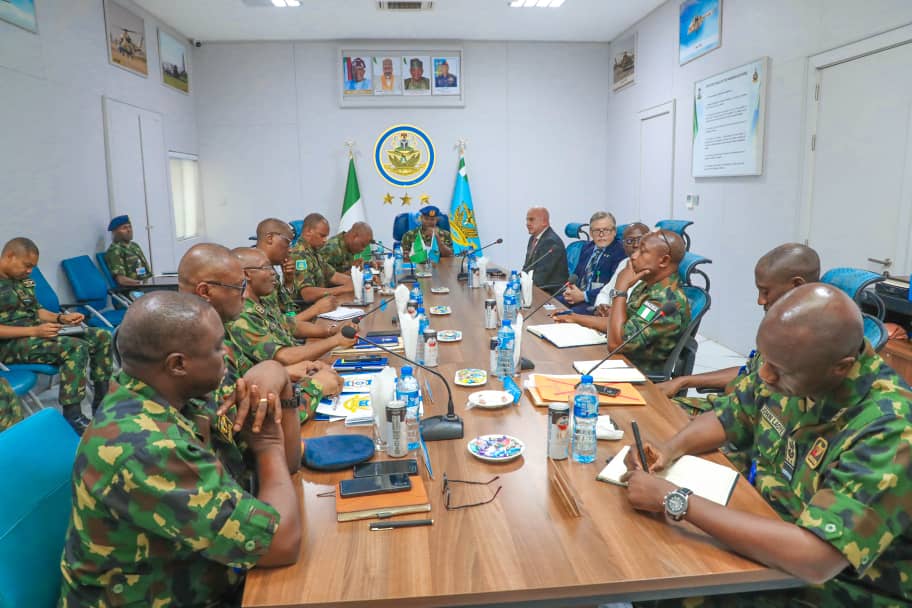
As part of emergency response measures, the NCDC disclosed that its National Emergency Operations Centre had already been activated in alert mode to coordinate preparedness efforts nationwide.
State governments were directed to immediately activate Ebola response structures, identify isolation centres, intensify surveillance at entry points, equip frontline health workers with protective equipment and begin public sensitisation campaigns.
Meanwhile, the Lagos State Government has assured residents that there are currently no confirmed or suspected Ebola cases in the state.
The Commissioner for Health, Akin Abayomi, said Lagos remains on high alert due to its position as one of Nigeria’s busiest entry points but stressed that there was no cause for panic.
Read Also:
Edo Police Arrest Passenger With 36 Live Cartridges During Stop-And-Search
According to him, the state’s biosecurity and disease surveillance systems remain fully active and capable of responding swiftly to any biological threat.
“The Lagos Biosecurity Bio-shield was built to protect and remains ready to respond to biological shocks. Preparedness for us is not a temporary reaction; it is a permanent culture embedded within our health system,” Abayomi said.
He explained that Lagos strengthened its emergency response systems during the 2014 Ebola outbreak and further improved them during the COVID-19 pandemic.
Nigeria’s latest Ebola alert has revived memories of the country’s successful containment of the virus in 2014 after an infected Liberian-American traveller, Patrick Sawyer, arrived in Lagos and exposed dozens of people before authorities intervened.
At the time, rapid contact tracing, aggressive isolation measures and coordinated public health interventions helped Nigeria successfully contain the outbreak, earning global praise from the World Health Organization.
Health authorities are now urging Nigerians to remain calm, maintain proper hygiene, avoid misinformation and report suspected symptoms early as surveillance measures intensify across the country.