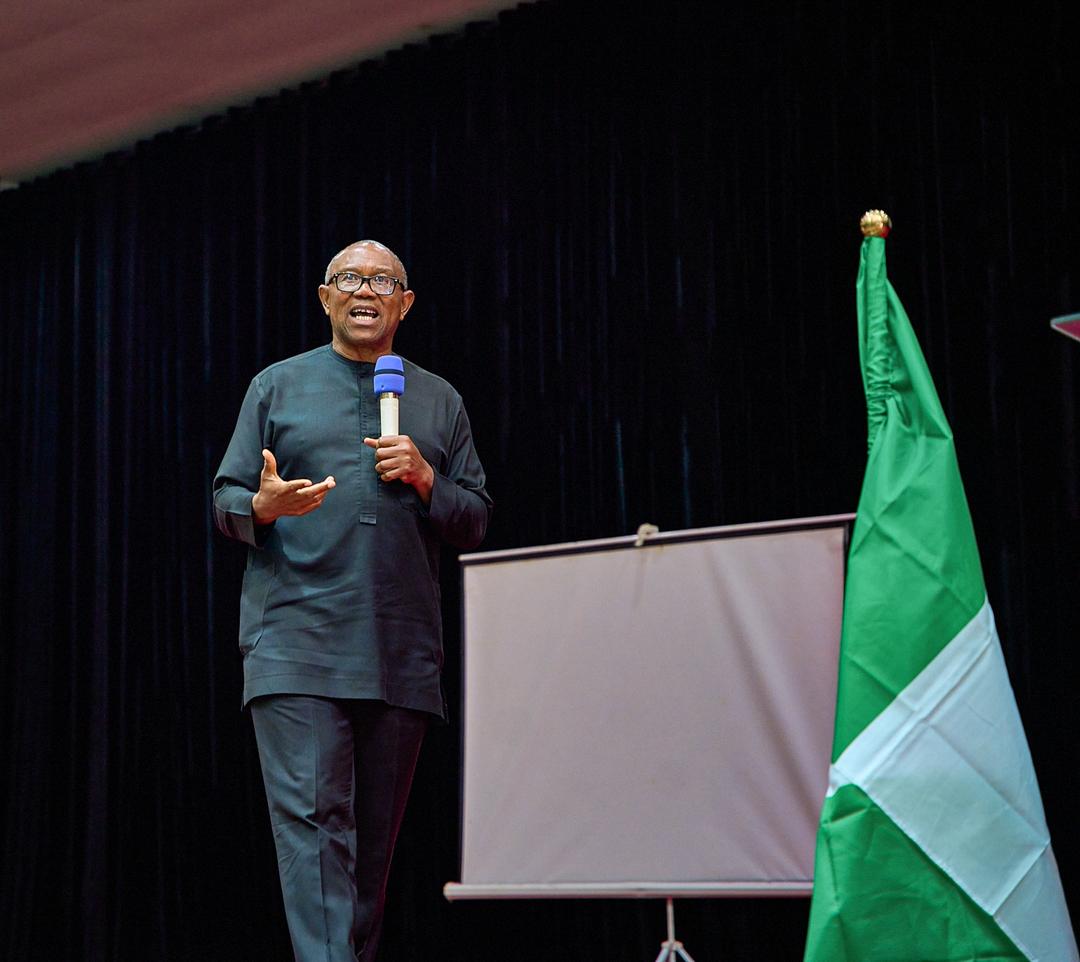
Former Anambra State Governor and 2023 presidential candidate, Peter Obi, has declared that he would take a hardline approach against terrorism if elected president, ruling out negotiation and pledging decisive military action.
Speaking during an interview on Arise TV on Monday, Obi said the scale of insecurity in Nigeria demands a firm and immediate response, particularly following the recent killing of senior military officers in Borno State.
“No nation will lose about 10 of its senior officers without a response. I will declare war on the terrorists. There is nothing like negotiation,” he said.
Obi pointed to his time as governor of Anambra State as proof that security can be restored with strong leadership and clear strategy. He recalled seeking approval from former President Olusegun Obasanjo to implement decisive measures during his tenure.
“I had to come here and tell President Obasanjo, this is what I want to do and you must allow me to do it,” he said, adding that the results were evident at the time.
He also referenced testimonies from past security officials to support his claims, noting that Anambra experienced a period of relative calm during his administration.
However, Obi acknowledged that military action alone would not solve the country’s security challenges. He argued that the current crisis is rooted in years of poor governance, weakened institutions, and neglect of young people.
“What you are seeing today is the cumulative effect of leadership failure over the years,” he said.
Read Also;
Obi to Nigerians: Hold Leaders Accountable on Power Promises
To address this, he proposed a dual approach—combining immediate force against criminal elements with long-term reforms focused on governance, justice, and social development.
“You start building while you are pushing. You bring governance, justice, people are punished if they do the wrong thing,” he explained.
Obi also highlighted the importance of collaboration, naming key political figures such as Nasir El-Rufai and Rabiu Musa Kwankwaso as potential partners in addressing insecurity, particularly in the northern region.
He concluded by promising a hands-on leadership style if given the opportunity.
“I am not going to lead from the back. People will see, they will feel it,” he said.