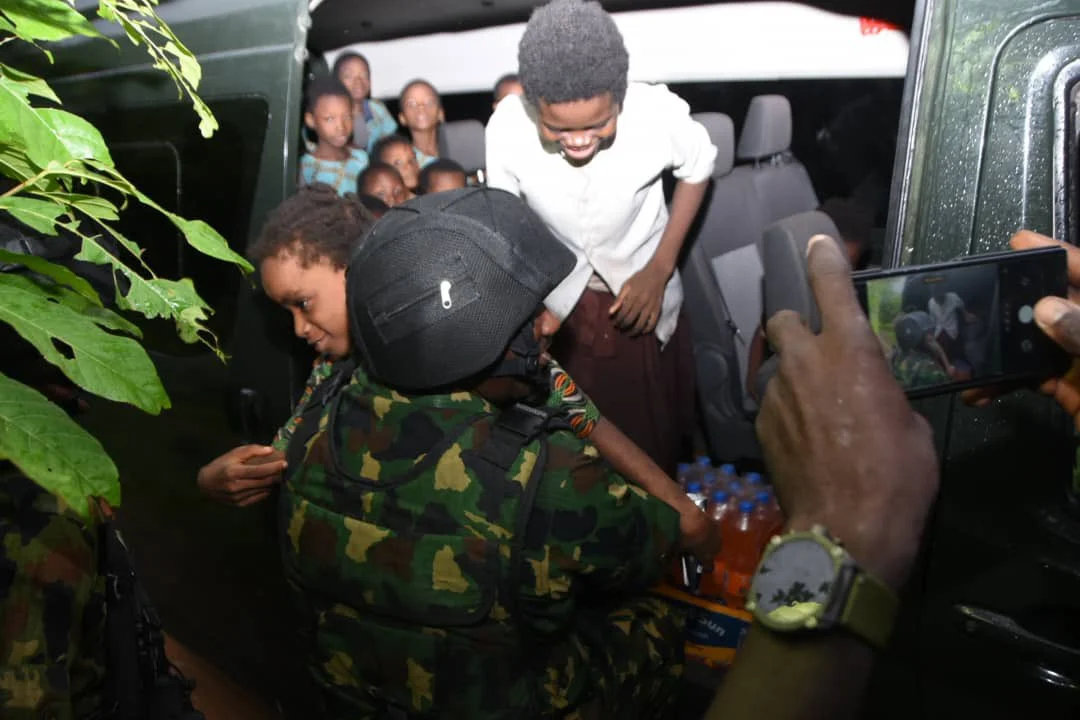
The successful rescue of 44 pupils and teachers abducted in Oyo State after 56 days in captivity has renewed demands for similar operations to save hundreds of other Nigerians still held by terrorists and kidnappers across the country.
Families of victims, community leaders, northern groups and opposition parties have urged the Federal Government and security agencies to apply the same intelligence-driven approach used in Oyo to rescue abductees in states including Borno, Kwara and Kaduna.
Security agencies had announced that the Oyo victims, who were kidnapped during attacks on schools in Oriire Local Government Area on May 15, were freed without the payment of ransom. The operation involved the military, Department of State Services (DSS) and the police.
While the development was widely celebrated, attention quickly shifted to other victims whose families have been waiting for months for their loved ones to return.
In Borno State, families of students abducted from schools in Askira/Uba Local Government Area appealed for urgent action, saying the Oyo rescue had given them hope but also reminded them of the uncertainty surrounding their children’s fate.
Parents of pupils taken from Mussa Primary and Junior Secondary School and Government Day Secondary School, Lassa, said they had received little information about their children since the attacks.
A parent, Ibrahim Millam, whose daughter Esther is among those still missing, appealed to the authorities not to allow the victims to remain in captivity indefinitely.
“We commend the government for rescuing the Oyo students. We are pleading that our children should also be rescued. They are our hope,” he said.
The Arewa Consultative Forum (ACF) also praised the Oyo operation but called on the government to extend similar efforts to other parts of the country.
The group’s National Publicity Secretary, Prof. Tukur Muhammad-Baba, said all Nigerians being held captive deserved equal attention.
He urged the government to ensure the release of victims in Borno, Kaduna, Kwara, Zamfara and other affected states.
Similarly, the Northern Elders Forum said the rescue should not overshadow the government’s responsibility to prevent abductions in the first place.
The forum’s spokesperson, Prof. Abubakar Jiddere, questioned why schoolchildren could still be kidnapped despite repeated security assurances.
“The government should have prevented the abduction of schoolchildren in the first instance. No child should be subjected to kidnapping, abduction or killing,” he said.
In Kwara State, concerns have also grown over the 176 women and children abducted from Woro and neighbouring communities in Kaiama Local Government Area earlier this year.
Residents said the successful Oyo rescue had restored hope that similar operations could be carried out to free their relatives who have spent months in captivity.
A community stakeholder, Usman Zakari, said the development showed that coordinated action between governments and security agencies could produce results.
“Such operations can be replicated when there is strong cooperation between the state and Federal Government,” he said.
In Kaduna State, families of victims abducted during Easter Sunday attacks in Kachia Local Government Area said their hope was fading, with reports that some captives may have died due to harsh conditions in captivity.
Security analysts described the Oyo rescue as a positive example of what could be achieved through effective intelligence gathering and cooperation among security agencies.
Maiduguri-based analyst Abubakar Kareto urged the government to immediately apply the same model in other areas where victims remain trapped.
“The intelligence-led rescue model used in Oyo must be deployed elsewhere. No victim should be forgotten,” he said.
The African Democratic Congress (ADC) also called for equal commitment in rescuing all abducted Nigerians, warning that rescue operations should not become the only measure of success in fighting insecurity.
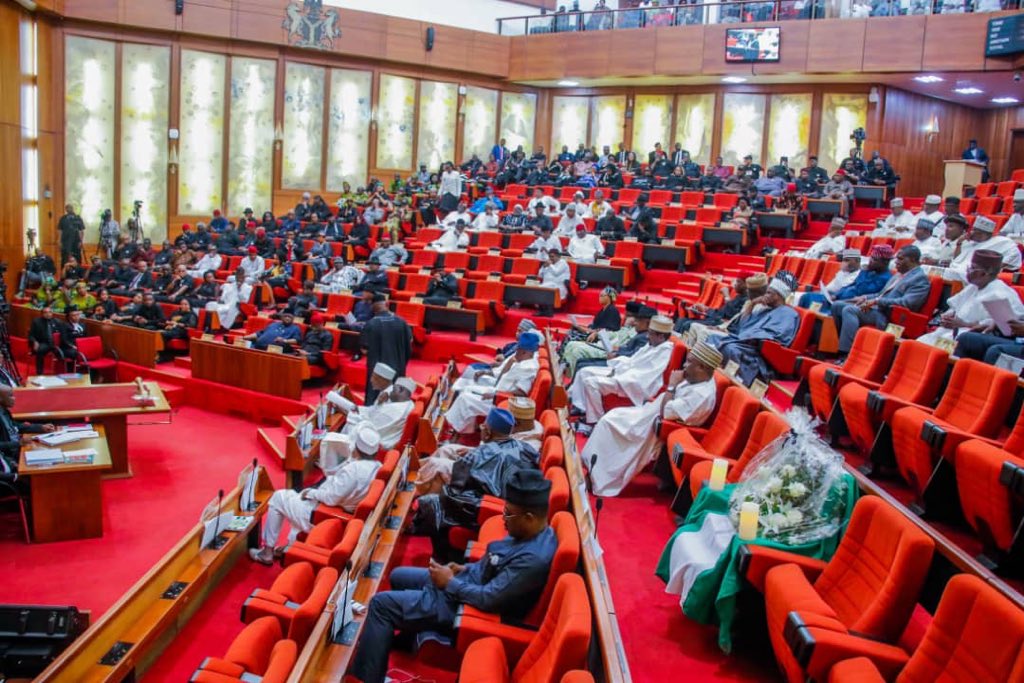
Responding to the concerns, the Presidency said President Bola Tinubu had directed security and intelligence agencies to rescue all Nigerians still in captivity, regardless of their location.
The President’s aide on media, Temitope Ajayi, said security agencies were carrying out rescue operations across the country and that no region was being given preferential treatment.
“There is no ethnic colouration to this. The President is the President of the country, and every life is important to him,” he said.
The growing calls highlight renewed public expectations for a broader and sustained security strategy that not only rescues victims but also prevents future kidnappings.