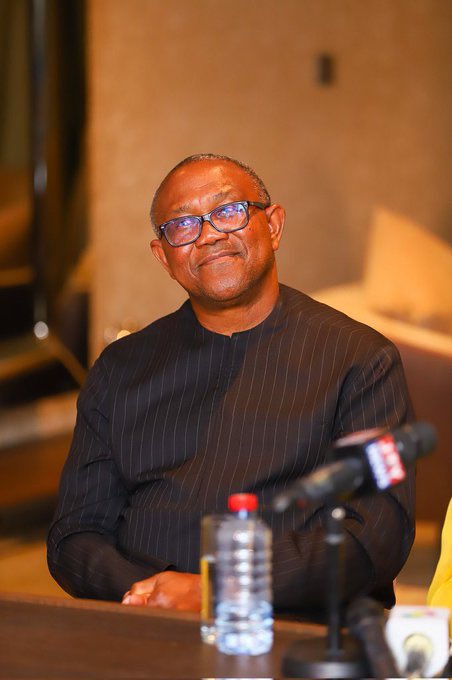
The internal crisis rocking the Labour Party has taken a new turn, with its interim national chairman, Nenadi Usman, stating that Peter Obi may be unable to contest the 2027 presidential election on the party’s platform.
Speaking during an interview, Usman explained that provisions of the Electoral Act make it legally impossible for anyone to join the party after its membership register has been closed ahead of primaries.
According to her, the party will shut its register 21 days before its primaries and submit the updated list to the Independent National Electoral Commission (INEC), leaving no room for late entries.
“Once we close the register and submit it, nobody can come from outside to be registered and contest. That would be legally impossible,” she said.
Despite her position, Usman acknowledged Obi’s significant role in the party’s rise during the 2023 elections. She revealed that he personally convinced her and many others to leave the Peoples Democratic Party and join the Labour Party at the time, driven by a shared belief in fairness and equity.
She also explained that her decision to leave the PDP was influenced by dissatisfaction over its refusal to zone the presidential ticket to the South, a move she considered unfair despite being from the North.
Read Also;
INEC Begins Verification Exercise at Labour Party Secretariat Ahead of 2027 Polls
The Labour Party has been struggling with a prolonged leadership crisis since the last general election, with factions battling for control of the party structure.
Legal battles have followed, with courts affirming Usman’s leadership while disputes from opposing factions remain unresolved at higher levels.
The crisis has weakened the party’s structure, leading to defections and reduced political influence. Obi himself had earlier pointed to the internal instability as part of the reason for distancing from the party.
With the 2027 elections approaching, the party has begun restructuring efforts, including membership revalidation and zoning its presidential ticket to the South, as it seeks to rebuild and reposition itself.