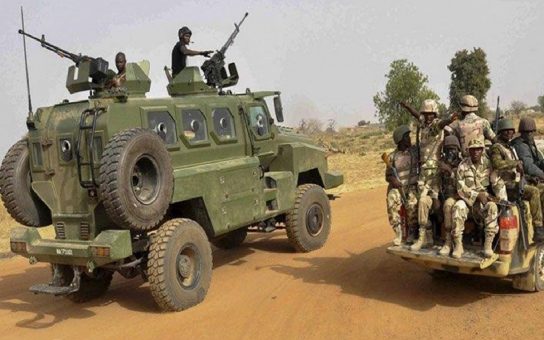

New data shows that African nations, including Nigeria, account for only a small fraction of global arms imports, raising concerns about the continent’s ability to respond to growing security threats. According to the Stockholm International Peace Research Institute, Africa represented just 4.5% of global arms imports in 2024 and 2025, compared with Europe’s dominant 48.2%.
Nigeria imported a total of 114 million in arms over the period, a sharp drop from 93 million in 2024 to 21 million in 2025, representing just 0.2% of global imports. Other African countries with notable imports included Egypt (825 million), Morocco (522 million), Algeria (313 million), Ethiopia (111 million), and Sudan (107 million). Analysts warn that such low import levels could hinder Africa’s capacity to confront terrorism, insurgency, and transnational crime effectively.
Globally, Europe dominated arms imports, with Ukraine leading at 7.605 billion, followed by Poland (3.711 billion) and Germany (1.872 billion). The United States remained the top arms exporter, providing 28 billion worth of weapons, or 43% of global transfers, while France, Russia, Germany, and Israel were also major suppliers.
Reacting to the data, retired Assistant Inspector-General of Police Wilson Inalegwu urged Nigeria to prioritize self-reliance in weapons production and security infrastructure. He stressed the importance of innovation, saying, “Strength lies in creativity, not just brute force. Every challenge is an opportunity for growth.”
Read Also;
Gulf Energy Targeted as Iran-Israel Conflict Escalates During Eid
Similarly, retired Commissioner of Police and security analyst Lawrence Alobi called for investment in technology and advanced equipment for Nigeria’s security agencies, noting that proactive preparation is crucial despite relatively peaceful regional relations. “We need to equip our security agencies considering the global trend. Wars are everywhere, and we must be well-prepared because we cannot predict what will happen tomorrow,” he said.
Experts agree that Africa’s limited access to modern military hardware presents both a challenge and an opportunity: while the continent risks being underprepared for emerging threats, there is a chance to develop indigenous capacity and technological innovation to safeguard security.