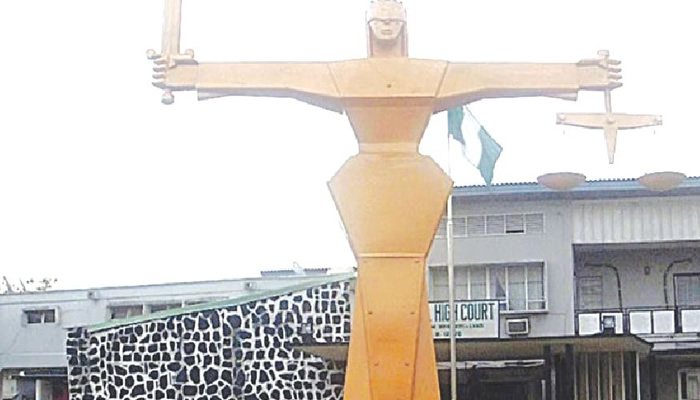
A witness from the Department of State Services (DSS) has told a Federal High Court in Abuja that statements linked to a key defendant in the 2011 UN building bombing case were translated months after they were obtained, and without any lawyer present.
The witness, identified as ABZ1A/ABZ1B, gave the testimony before Justice Emeka Nwite during a trial-within-trial aimed at determining whether the statements can be admitted as evidence.
The case involves the Federal Government and five defendants, including Khalid Al-Barnawi.
Under cross-examination, the DSS operative admitted that he did not translate the first defendant’s statements immediately after they were taken. According to him, the timing of the translation depended on instructions from a superior officer, as he was involved in multiple assignments.
He revealed that some translations were carried out in February 2017 but could not remember exactly when the original statements were recorded, despite suggestions that several months had passed between both processes.
The witness also confirmed that the defendant had no lawyer or relative present during the interview sessions, though he noted that the process was recorded on video.
He further stated that he had no knowledge of how the defendant was treated before being brought in for questioning, explaining that such responsibilities were handled by other officials.
On his role, the witness said he was part of a team led by a senior officer and was mainly responsible for translating statements from Hausa to English.
However, during questioning, he struggled to recall key details, including how many statements were made or who else was part of the interview team.
Regarding another defendant, he admitted he had no knowledge of events leading up to the statement, saying he only encountered the individual during the interview.
Read Also;
NCC Moves to Curb SIM Fraud with New Digital Security Platform
More inconsistencies emerged over statements linked to other defendants. While another witness had earlier claimed responsibility for obtaining one of the statements, this witness insisted he only wrote it down as it was dictated in Hausa before the defendant thumbprinted it.
The defence team challenged his credibility, arguing that he lacked sufficient knowledge of the investigation and may have misled the court. The witness, however, maintained that he acted strictly within his assigned duties.
Justice Nwite adjourned the case until April 20, 2026, for continuation of the trial-within-trial.