The ruling All Progressives Congress (APC) is battling growing internal tensions in several states as disagreements over consensus arrangements ahead of the 2027 general elections continue to divide party members and stakeholders.
While some states have embraced consensus as a way to maintain unity and avoid costly internal battles, others are witnessing strong resistance from aspirants demanding open and transparent primaries.
Investigations by The PUNCH revealed that states such as Katsina, Borno and Jigawa have largely adopted consensus arrangements for various elective positions, with party leaders insisting the approach will reduce conflict and strengthen cohesion within the party.
However, in states like Ogun, Yobe, Oyo, Sokoto, Kano and others, the arrangement has sparked protests, political realignments and accusations of candidate imposition.
Meanwhile, Vice President Kashim Shettima on Thursday submitted President Bola Tinubu’s completed expression of interest and nomination forms to the APC national leadership in Abuja.
The event, held at the Shettima Hall of the Bola Tinubu International Conference Centre, attracted top government officials and party stakeholders.
Speaking during the submission, Shettima called on Nigerians across political and ethnic divides to support Tinubu’s re-election bid in 2027, saying continuity was necessary to sustain ongoing reforms and development.
APC National Chairman, Nentawe Yilwatda, also described the submission of the forms as a major step toward consolidating the administration’s policies and achievements.
The party’s National Secretary, Ajibola Bashiru, confirmed that the APC would use direct primaries to select its presidential candidate, stressing that any member willing to challenge Tinubu was free to do so.
“Our National Executive Committee has already endorsed President Tinubu and the party stands by that decision,” Yilwatda said.
The APC began the sale of nomination forms on April 28, while screenings are expected to run between May 7 and May 12. The presidential primary is scheduled for May 23.
In Katsina State, Governor Dikko Radda defended the adoption of consensus candidates, saying the decision was jointly reached by stakeholders to preserve unity within the party.
“Katsina is an APC state and we believe consensus will help us maintain peace and cohesion,” he said after submitting his governorship nomination form in Abuja.
In Borno State, stakeholders have reportedly settled for former Commissioner for Works, Mustapha Gubio, as the consensus governorship candidate after Senator Kakashehu Lawan stepped down from the race.
Similarly, the APC in Jigawa State has adopted consensus for senatorial, House of Representatives and State Assembly positions. Although no aspirant has openly rejected the arrangement, signs of dissatisfaction are beginning to emerge online among supporters of unsuccessful candidates.
One of the aspirants, Dr Halima Zakari, however accepted the outcome, saying party unity must remain the priority.
But in several other states, opposition to consensus has become more intense.
In Zamfara, former governor Mahmuda Shinkafi and other aspirants rejected any attempt to impose candidates, insisting that all positions apart from the governorship should be contested through direct primaries.
“We will never agree to the imposition of candidates,” Shinkafi declared.
Former governor Abdulaziz Yari acknowledged the growing resistance, saying the party would adopt direct primaries where consensus fails.
In Ogun State, the consensus arrangement has also generated controversy, especially over the Ogun East senatorial ticket.
Governor Dapo Abiodun was recently adopted as the consensus candidate for the district, a development that reportedly strained relations between him and former governor Gbenga Daniel, who accused party leaders of excluding him from the process.
The situation is also tense in Ogun West, where several prominent figures, including Deputy Governor Noimot Salako-Oyedele, are competing for the senatorial ticket.
Party insiders admitted there was growing frustration among members over what many described as “forced consensus.”
In Yobe State, divisions deepened after APC stakeholders endorsed former Secretary to the State Government, Baba Wali, as the preferred governorship candidate.
Several aspirants, including Senator Ibrahim Bomai and Musa Tumsah, rejected the arrangement and demanded direct primaries.
Bomai described the move as an attempt to undermine democracy within the party.
“We reject any scheme that undermines fairness and democratic rights,” he said.
Kano State is also witnessing growing disagreement over consensus arrangements. A youth group, Coalition for Better Kano, rejected plans to hand the Kano Central senatorial ticket to former governor Ibrahim Shekarau, insisting that loyal party members deserved recognition.
In Oyo State, tensions among governorship aspirants continue to rise despite ongoing consultations over consensus.
Read Also:
Kano APC Endorses Governor Yusuf for Second Term Ahead of 2027 Election
Although Senator Sharafadeen Alli is believed to enjoy strong backing within the APC structure, several other aspirants, including former Minister of Power Adebayo Adelabu, are reportedly insisting on direct primaries.
A party source said the leadership was still pushing for consensus to present a “strong and marketable candidate” capable of reclaiming power in the state.
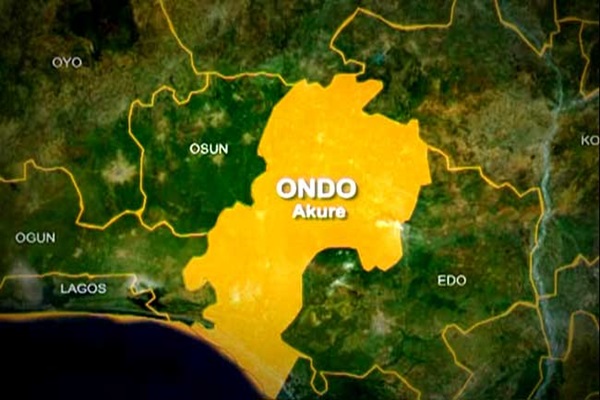
Similar disagreements have emerged in Sokoto, Ondo, Benue, Gombe, Kwara and Plateau states, where some aspirants are rejecting consensus arrangements and demanding competitive primaries.
In Ondo, many aspirants have already obtained nomination forms and are preparing for direct contests, while the APC in Benue has officially adopted direct primaries.
The growing internal disagreements come as the APC prepares for one of its most crucial election cycles since returning to power in 2015, with party leaders under pressure to balance unity, fairness and political ambition ahead of the 2027 polls.