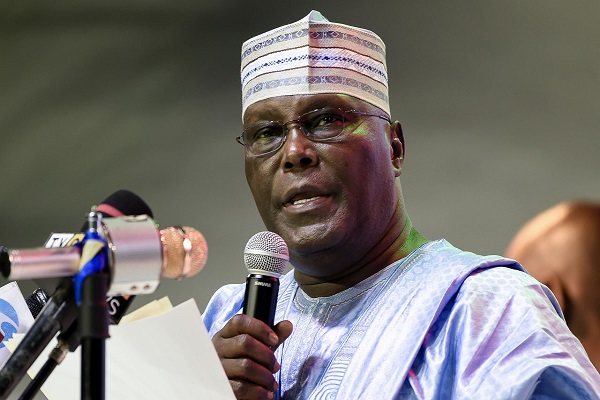
Former Vice President Atiku Abubakar has raised concerns over reported plans to suspend political campaigns in parts of Northern Nigeria, warning that such a move could threaten citizens’ constitutional rights.
His reaction follows discussions in the Senate about possibly halting political activities in states heavily affected by insecurity, including Borno State, Benue State, and Plateau State.
In a statement issued by his aide, Atiku described the idea as troubling. While acknowledging that insecurity remains a serious issue, he stressed that it should not be used as a reason to limit people’s participation in the democratic process.
According to him, the right to vote and take part in elections is fundamental and must not be taken away under any circumstance. He warned that restricting political activities in certain regions could create fears of exclusion and disenfranchisement.
Atiku also pointed out that earlier concerns about weakening voter participation in the North now appear more valid in light of recent developments. He argued that democracy cannot thrive if people’s voices are silenced, even in the face of insecurity.
He maintained that Nigerians, regardless of where they live, deserve both safety and the freedom to engage in politics, adding that one should not come at the expense of the other.
The former vice president called on the Independent National Electoral Commission, security agencies, and the administration of Bola Ahmed Tinubu to clarify their stance and reassure citizens that no region would be denied its rights.
Read Also;
Opposition Parties Agree on Single Presidential Candidate for 2027
The debate comes amid growing concern in the National Assembly over worsening insecurity, especially in the North-East, North-West, and North-Central regions.
Last week, Senator Abdul Ningi suggested that the Senate consider drastic measures, including suspending political activities in states most affected by violence, until the situation improves.
He argued that the increasing attacks, including those linked to Boko Haram, require urgent and decisive action beyond routine discussions.
Overall, the issue has sparked a broader debate about how to balance national security with the protection of democratic rights.